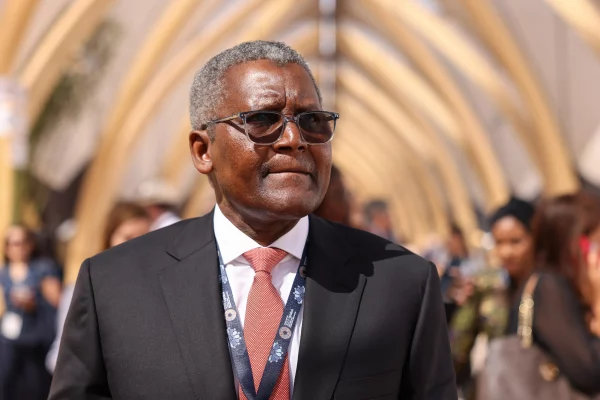

Alhaji Aliko Dangote has warned that escalating tensions in the Middle East and resulting global oil market volatility could have far-reaching consequences for Nigeria and African economies, even as he expressed optimism about Nigeria’s investment outlook following President Bola Tinubu’s recent state visit to the United Kingdom. Speaking in Lagos on Monday after a courtesy visit and Eid-el-Fitr homage to the president, Africa’s richest industrialist cautioned that prolonged instability would transmit higher fuel prices, rising transport costs, and inflationary pressures across the continent.
Dangote noted that while Nigeria has no direct role in the Middle East crisis, the country remains deeply vulnerable because of its integration into global energy markets. “We are part of a global village, and unfortunately, developments like this will affect us even if we are not directly involved,” he said. He warned that if the situation does not de-escalate, African economies could pay a heavy price, compounding existing economic challenges. The warning carries particular weight given Dangote’s position as the operator of Nigeria’s largest domestic refinery, which has become a critical determinant of local fuel pricing.
From a macroeconomic perspective, the transmission channels of Middle East volatility are well understood. Disruptions to Gulf oil production or shipping routes through the Strait of Hormuz affect global crude prices, which in turn influence Nigeria’s petrol pricing under the deregulated downstream sector. With the removal of fuel subsidies, domestic prices now more directly reflect international market movements. Dangote pointed to the cascading effects that follow: “Energy affects everything. From small businesses like barbers to industries running generators, everyone will feel the impact if costs continue to rise.” He added that some countries are already adopting coping strategies such as reduced workdays, energy rationing, and remote working arrangements—measures that, while necessary, could reduce productivity and slow economic output.
The industrialist also highlighted the fiscal risks for governments. As fuel prices rise, the pressure to reintroduce subsidy-like interventions increases, potentially straining public finances at a time when many African countries are already grappling with elevated debt burdens. “Africa is already grappling with debt, and additional shocks will only compound hardship for governments and the people,” Dangote said. He noted that governments could face mounting fiscal strain as revenues fluctuate under unstable global oil market conditions, further limiting the fiscal space needed for infrastructure and social investment.
Amid these concerns, Dangote expressed cautious optimism about Nigeria’s medium-term economic trajectory, citing the outcomes of President Tinubu’s recent state visit to the United Kingdom. He described the trip as having opened new economic opportunities and strengthened Nigeria’s investment outlook. “I believe the visit has opened many doors. Diplomacy without economic outcomes is incomplete, and this has created opportunities for Nigeria,” he said. He noted that agreements reached during the visit, particularly in infrastructure and financing, signal growing international confidence in Nigeria’s reform agenda. “It is not just about the money committed, but the confidence it shows in Nigeria and the reforms being implemented.”
Dangote highlighted the £746 million port partnership as a significant development that would improve trade efficiency and support medium-term economic expansion. He expressed optimism that other countries, including Germany, would follow with investments as confidence in Nigeria’s economy strengthens. “Once confidence is established, other countries will come in. It is a signal that Nigeria is ready for business,” he said. He also noted that the agreements would enable Nigerian private sector players to access international financing and technical support for large-scale projects—a breakthrough, he said, given that such credit facilities have historically remained underutilised by Nigerian businesses.
Reaffirming his support for the administration, Dangote expressed confidence that the combination of reforms, strategic partnerships, and growing investor confidence would drive sustainable economic growth in Nigeria. However, he emphasised that the trajectory remains vulnerable to external shocks beyond the government’s control, urging global leaders to prioritise de-escalation of Middle East tensions. “In Africa, in Nigeria many people depend on daily earnings. If they don’t work, they don’t eat. So we must pray this situation comes down quickly,” he said.