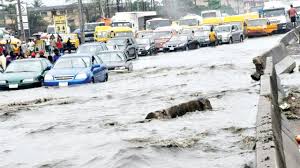

The Lagos State Ministry of Environment and Water Resources has issued a comprehensive flood and wind alert for the 2026 rainy season, calling for heightened community vigilance and strict compliance with environmental safety standards. During a news conference on Friday, March 13, 2026, the Commissioner for Environment, Mr. Tokunbo Wahab, detailed the state’s Seasonal Climate Predictions, noting that the combination of heavy rainfall and strong winds could pose significant risks to lives, property, and commercial activities.
The structural and meteorological consequence of the 2026 forecast is based on a projected weak La Niña and a neutral phase of the El Niño Southern Oscillation (ENSO). According to data from the Nigerian Meteorological Agency (NiMet), these conditions suggest an early onset and a delayed cessation of the rainy season in Lagos. Specifically, rainfall is expected to begin as early as the last week of March and persist until the first week of December, with annual rainfall amounts ranging between 1,650mm and 3,030mm across the state.
Analytically, the Ministry has provided localized timelines for various districts to aid residents in their planning. In Ikeja and Ikorodu, the rains are predicted to start on March 31, while Badagry and Epe can expect onset dates of March 28 and 29, respectively. Lagos Island is projected for a March 30 start. Across all 20 Local Government Areas, the average rainfall is estimated at 1,965mm, a volume that suggests “above-normal” levels capable of overwhelming existing infrastructure if not properly managed.
The impact on “Infrastructure and Public Safety” involves a multi-agency response strategy. Commissioner Wahab warned that strong winds accompanying the onset and end of the season could affect billboards and telecommunications masts, prompting an alert to the Lagos State Signage and Advertisement Agency (LASAA). Furthermore, the state is maintaining close collaboration with the Ogun-Oshun River Basin Development Authority to regulate water releases from the Oyan Dam, a critical measure to protect low-lying communities such as Agiliti, Agboyi, and Ajegunle from downstream flooding.Furthermore, the Commissioner emphasized the role of civic responsibility in flood prevention.
He appealed to residents to end the indiscriminate dumping of refuse and the construction of structures over drainage channels, which significantly impede the free flow of storm water. Motorists were advised to observe speed limits during downpours, while residents in high-risk flood plains like Makoko, Iwaya, and Shibiri were urged to remain vigilant and prepared for possible relocation as the first peak of the rainy season approaches.The long-term outlook for Lagos involves a shift toward year-round drainage maintenance and sustainable waste management. By strengthening its network of river gauge stations and collaborating with NiMet, the state government aims to provide early warning tools that support farmers, businesses, and aviation planners. For the average Lagosian, the Ministry’s message is clear: personal preparedness and the regular clearing of domestic drains are essential to supporting government efforts in mitigating the impact of an intense 2026 rainy season.