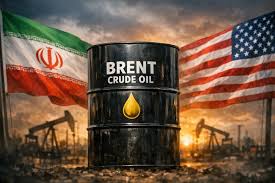

Iran has warned that it could block oil shipments through the Strait of Hormuz, raising fears that escalating tensions in the Middle East could push global crude prices as high as $200 per barrel.
The warning was issued by Ebrahim Zolfaqari, spokesperson for Iran’s Khatam al-Anbiya Central Headquarters, during remarks on Wednesday amid rising hostilities between Iran and the United States. “And let us firmly reiterate that we will never allow even a single litre of oil to pass through the Strait of Hormuz for the benefit of the US, the Zionists, and their partners,” Zolfaqari said.
He warned that any vessel or oil cargo destined for the United States, Israel, or their allies could be targeted. “Any vessel or oil shipment intended for America, the Zionist regime, or their hostile allies will be a legitimate target for us,” he said. Zolfaqari also suggested that further escalation in the region could sharply drive up global energy prices. “With the expansion of war in the region, we have announced that you should prepare for $200 per barrel because the price of oil depends on security in the region, and you are the source of insecurity,” he said.
The remarks come a day after Donald Trump, President of the United States, warned that “death, fire, and fury will reign upon them (Iran)” if Tehran attempted to disrupt the flow of oil through the strategic waterway.
Global oil markets have already experienced heightened volatility in recent days as tensions in the Middle East intensify. Crude oil prices surged past $100 per barrel on Monday, the highest level since July 2022, before retreating to about $87 per barrel on Tuesday, according to market data. Security concerns have also begun to affect global shipping routes. On March 2, several major container shipping lines suspended sailings through the Suez Canal and the Strait of Hormuz due to rising risks linked to the conflict.
The Strait of Hormuz remains one of the most strategically important energy transit routes in the world. The narrow maritime corridor connects the Persian Gulf with the Gulf of Oman and the Arabian Sea, serving as the primary sea passage for oil exports from major Gulf producers to global markets. Analysts say any disruption to shipments through the strait could significantly impact global energy supply and further drive up oil prices.