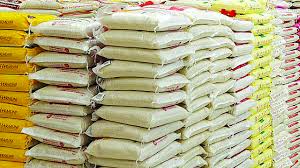

Nigeria’s domestic rice industry, which saw significant expansion in milling capacity and productivity over the last decade, is currently facing a severe downturn as local producers struggle to compete with cheaper foreign imports. According to recently released UN Comtrade data, Nigeria spent approximately ₦51 billion ($34.4 million) on foreign rice in 2024. This resurgence in imports, coupled with high operational costs and porous borders, is systematically eroding the gains made under previous agricultural interventions, posing a direct challenge to President Bola Tinubu’s food security mandate.
The primary hurdle for the sector remains the persistent lack of price competitiveness. Despite an increase in the number of integrated rice mills across the country, Nigerian processed rice remains more expensive than imported varieties. Industry stakeholders attribute this to the high cost of inputs, including fertilizers and high-quality seeds, as well as the exorbitant cost of energy and logistics. For many farmers, the inability to sell paddy at a profitable rate has led to a widespread abandonment of rice cultivation in favor of less capital-intensive grains like sorghum.
Muhammed Augie, the former state chairman of the Rice Farmers Association of Nigeria (RIFAN) in Kebbi State, noted that the situation has reached a critical point. In Kebbi, a major rice-producing hub, less than 30 percent of available rice fields were cultivated last year. This decline is largely due to a breakdown in the value chain; as local millers shut down their operations due to unfavorable market conditions, farmers have lost their primary off-takers. Without a guaranteed market for their paddy, smallholder farmers are increasingly viewed as high-risk by lenders, further restricting access to necessary credit.
The competitive pressure is exacerbated by the influx of rice through neighboring countries. UN Comtrade data reveals that Benin and Togo spent $705.7 million and $74.4 million, respectively, on rice imports in a single year volumes that far exceed their domestic consumption needs. Analysts suggest that a significant portion of this grain eventually enters the Nigerian market through smuggling across porous borders. This “grey market” rice, often subsidized in its country of origin, enters Nigeria without paying the requisite duties, making it impossible for local millers to match its retail price.
The Rice Processors Association of Nigeria (RIPAN) estimates that the country requires approximately 11 million metric tons of paddy to meet domestic demand. However, current local production stands at roughly 4.8 million metric tons, leaving a substantial deficit of over 6 million metric tons. While Nigeria possesses a theoretical milling capacity of 7.5 million metric tons, RIFAN reports that most facilities are operating at a fraction of their potential. These underutilized assets result in high overhead costs per unit, further driving up the final price of locally processed rice.
The industrial impact is already visible, with over 90 rice mills across the country reportedly shutting down operations over the last year. Peter Dama, National Chairman of the Rice Millers Association of Nigeria (RIMAN), stated that over 50 of these closures involved small-scale millers who lack the financial buffers to survive prolonged periods of low demand. The combination of high interest rates, which currently exceed 26 percent, and the rising cost of diesel for power generation has created a hostile environment for agro-processing.
Furthermore, the Federal Government’s decision in June 2024 to grant an import waiver on essential food items, including rice, has created a policy dilemma. While the waiver was intended to provide immediate relief to consumers battling high food inflation which peaked at over 40 percent in mid-2024 it has inadvertently squeezed the margins of domestic producers. Local millers argue that the duty-free policy favors foreign exporters at the expense of the local value chain, potentially leading to a total collapse of the domestic industry if not balanced with targeted support for farmers.
The outlook for the 2026 planting season remains uncertain as farmers and millers await clearer signals from the administration regarding long-term protectionist measures or production subsidies. To stabilize the sector, experts suggest that the government must address the “root causes” of high production costs, specifically energy and security in farming clusters. Without these structural fixes, Nigeria risks becoming more dependent on global food supply chains, undermining its objective of achieving self-sufficiency in a key national staple.