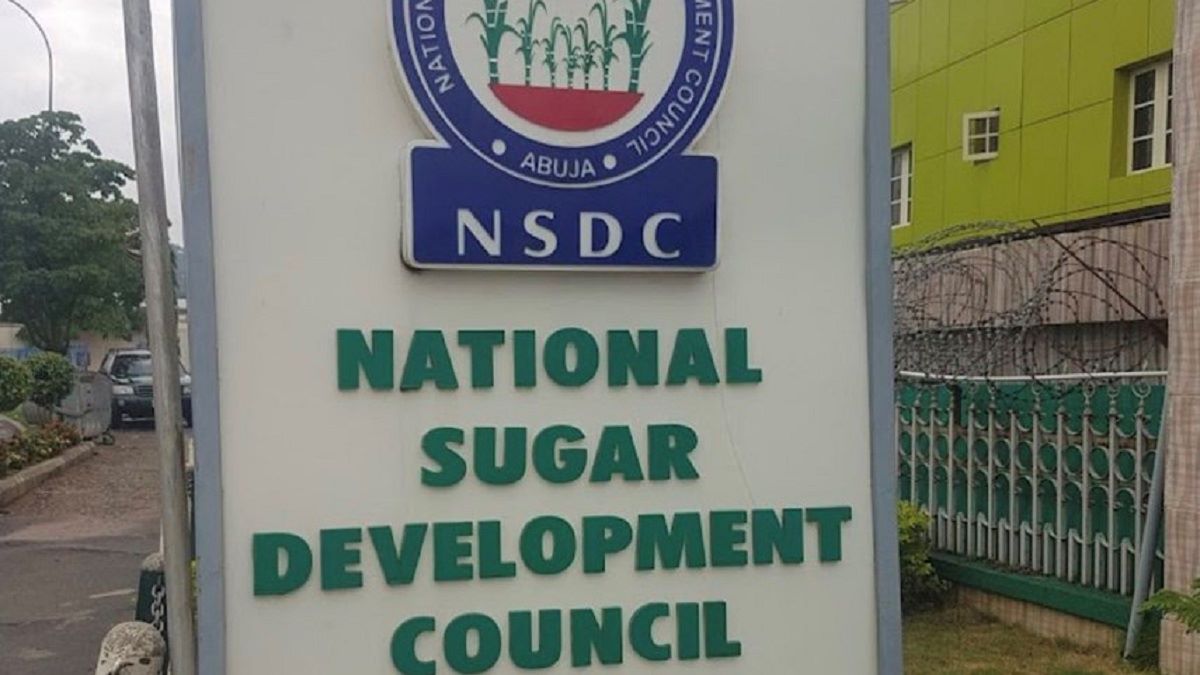

The National Sugar Development Council and the Bank of Industry have established a N10 billion Sugar Project Acceleration Fund aimed at supporting the emergence and advancement of greenfield sugar projects across Nigeria.
The fund is designed to provide financing and project development support to viable investors, to accelerate the development of a sustainable and competitive sugar industry in the country.
According to a statement issued by the council on Sunday, the NSDC recently hosted an interactive session where officials from both organisations engaged greenfield project promoters, considered potential beneficiaries of the fund.
Speaking during the session, the Executive Secretary and Chief Executive Officer of the NSDC, Kamar Bakrin, said that access to capital alone would not automatically translate into increased sugar production.
“Capital availability, on its own, will not result in sugar production,” Bakrin said.
He explained that although development finance institutions manage substantial agro-industrial financing pools and impact investors continue to seek credible investment opportunities in Africa’s food systems, the major challenge often lies in the lack of well-structured and bankable projects.
“The constraint, far more often than people appreciate, is not the availability of money. It is the availability of projects that are structured, documented, and de-risked to the standard required to receive financing,” he said.
Bakrin noted that developing a bankable sugar project begins with a technically sound feasibility study addressing agronomy, water resources, infrastructure requirements, and environmental and social risks with the same level of scrutiny applied by financial institutions during due diligence.
He added that credible projects must also include robust financial models capable of demonstrating resilience under adverse economic scenarios.
Such projects, he explained, must also have clear land tenure arrangements, well-defined outgrower programmes, realistic implementation timelines, and experienced management teams capable of executing large-scale agricultural investments.
Bakrin said many proposals submitted to the council do not yet meet these requirements, highlighting the need for structured support during the early stages of project development.
He described the Sugar Project Acceleration Fund as a pre-investment facility created to help project promoters develop proposals to a bankable standard.
“SPAF is NSDC’s structured pre-investment facility, established to provide qualifying project promoters with the technical, financial, and advisory support required to develop their projects to bankable standard,” he said.
Bakrin stressed that the fund is not a grant programme but a results-driven initiative designed to build a pipeline of investor-ready sugar projects capable of attracting large-scale financing.
Also speaking at the event, the Executive Director overseeing public sector operations at the Bank of Industry, Hadiza Shuaib, said the bank would serve as the fund manager for the facility.
She explained that while BOI would manage the financial aspects of the programme, the NSDC would provide sector leadership and technical guidance.
Shuaib said the bank’s responsibilities include credit appraisal, risk management, loan disbursement, monitoring and evaluation, and account closure after repayment.
“As Fund Manager, BOI will ensure that projects are properly structured, risks are effectively managed, and funds are deployed responsibly,” she said.
She also emphasised the programme’s focus on capacity development, noting that skills training and technical support would be provided alongside financing.
According to her, only businesses engaged in sugar or sugar-related activities will qualify to benefit from the facility. Greenfield projects represented at the interactive session included Illaj Sugar, Brent Foods, Crystal Sugar, Legacy Sugar, Saro Sugar, Awaa, Ganic, and Confluence Sugar.