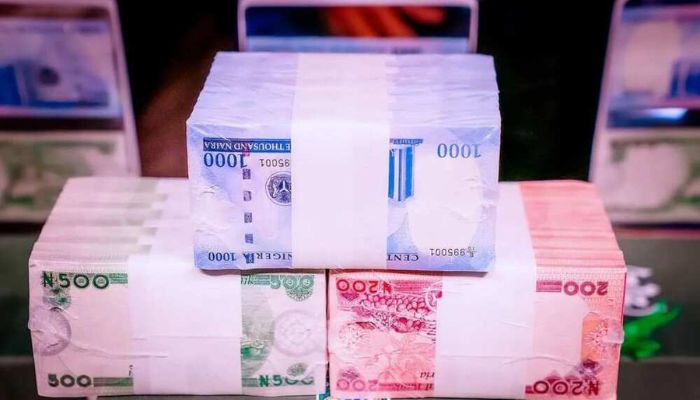

Nigerians repaid about N1.33tn in personal loans within one year as outstanding household borrowing declined sharply between November 2024 and November 2025, according to data from the Central Bank of Nigeria.
Figures contained in the CBN’s Economic Report for November 2025 showed that personal loan balances dropped from N3.32tn in November 2024 to N1.99tn in November 2025, reflecting a significant reduction in consumer borrowing during the period.
The sharp decline in personal lending contributed to a broader contraction in consumer credit across Nigeria’s banking system.
Further analysis of the report showed that total consumer credit outstanding fell from N4.42tn in November 2024 to N3.19tn in November 2025, signalling weaker household borrowing conditions.
According to the report, “Consumer credit outstanding declined by 13.32 per cent to N3.19tn, from N3.68tn in the preceding month. The decrease was owing to contraction in both retail and personal lending.”
Despite the decline, personal loans remained the largest component of consumer credit in the economy. The CBN said personal loans accounted for 62.38 per cent of total consumer credit at N1.99tn, while retail loans represented 37.62 per cent valued at N1.20tn.
While personal loan balances declined sharply, retail lending recorded a modest increase during the same period. Retail loans rose from N1.11tn in November 2024 to N1.20tn in November 2025, representing a year-on-year increase of about N90bn.
However, the growth in retail lending was insufficient to offset the drop in personal loans, resulting in the overall contraction in consumer credit.
The development reflects changing credit conditions in Nigeria’s financial system as households adjusted borrowing behaviour amid elevated interest rates and tight monetary policy.
Throughout much of 2025, the Central Bank of Nigeria maintained an aggressive anti-inflation stance by keeping borrowing costs high.
The bank’s Monetary Policy Committee retained the Monetary Policy Rate at 27.5 per cent for most of the year before reducing it by 50 basis points to 27 per cent in September 2025, marking the first rate cut since 2020.
The committee subsequently held the MPR at 27 per cent during its November 2025 meeting, signalling a cautious approach despite signs of easing inflationary pressure.
High interest rates typically discourage new borrowing while encouraging households and small borrowers to prioritise repayment of existing loans.
The data also revealed a gradual shift in the structure of consumer borrowing. Although personal loans remain dominant, their share declined compared to earlier periods as households reduced exposure to unsecured borrowing.
Retail lending, which is often linked to smaller consumer purchases and short-term financing, showed moderate growth during the review period.
At its 304th meeting in Abuja, the Monetary Policy Committee announced a further policy adjustment, reducing the benchmark interest rate to 26.5 per cent in February 2026.
The Governor of the Central Bank, Olayemi Cardoso, said the committee adopted the decision following signs of sustained disinflation, exchange rate stability, and improving external reserves.
“The committee decided to reduce the monetary policy rate by 50 basis points to 26.5 per cent,” Cardoso said after the meeting.
The MPC also retained the standing facilities corridor around the MPR at +50/-450 basis points, while maintaining the Cash Reserve Requirement for Deposit Money Banks at 45 per cent and 16 per cent for merchant banks, with 75 per cent applied to non-Treasury Single Account public sector deposits.
Cardoso explained that the decision was based on “a balanced evaluation of risks to the outlook,” indicating that the current disinflation trajectory is likely to continue.
According to him, headline inflation eased to 15.10 per cent in January 2026 from 15.15 per cent in December 2025, marking the eleventh consecutive month of year-on-year decline.
Food inflation declined significantly to 8.89 per cent from 10.84 per cent, while core inflation dropped to 17.72 per cent from 18.63 per cent.
On a month-on-month basis, headline inflation fell to -2.88 per cent in January from 0.54 per cent in December, suggesting a continued moderation in price pressures.
Cardoso also highlighted improvements in the external sector, noting that Nigeria’s gross external reserves rose to $50.45bn as of February 16, 2026, the highest level recorded in 13 years.
The reserves currently provide import cover of about 9.68 months for goods and services.
Looking ahead, the CBN governor said the outlook suggests that domestic disinflation will likely continue in the near term, supported by exchange rate stability and improved food supply.
However, he warned that increased fiscal spending, particularly election-related expenditure, could pose upside risks to the inflation outlook.
Cardoso reaffirmed the committee’s commitment to an evidence-based policy framework anchored on the bank’s core mandate of ensuring price stability while safeguarding the resilience of the financial system.