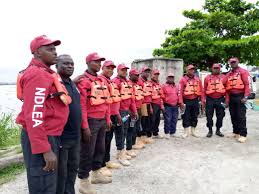

The National Drug Law Enforcement Agency (NDLEA) has revealed that approximately 2,553,132.90 kilograms of illicit drugs were confiscated at Nigerian seaports between 2021 and 2025. According to the latest agency statistics released on Thursday, March 5, 2026, these maritime seizures carry an estimated street value exceeding ₦3 trillion, representing a massive financial disruption to global drug trafficking syndicates utilizing Nigeria’s coastal gateways.
The structural and statistical consequence of these findings highlights a volatile but generally upward trend in enforcement success. Seizures began at 96,690.90 kg in 2021, experienced a sharp decline to 20,296.70 kg in 2022, and rebounded to 86,169.54 kg in 2023. However, the data reached a historic zenith in 2024, with an unprecedented 1,745,422.75 kg intercepted, before stabilizing at a high volume of 605,553.01 kg in 2025. This 2024 surge suggests a shift toward high-volume bulk shipments that were successfully neutralized by intensified port intelligence.
Analytically, a port-by-port breakdown underscores the strategic importance of various maritime hubs. Apapa Port showed consistent growth in interceptions, peaking at 153,028.19 kg in 2025. Tin Can Island Port witnessed an explosive increase in 2024, recording over 454,000 kg. Most notably, the Port Harcourt Seaport Command posted the most dramatic fluctuations, leaping from negligible figures in 2023 to over 1.2 million kg in 2024, while the Marine Command saw its surveillance of inland waterways result in a steady rise to 11,156 kg by 2025.
The impact on “Financial Degradation of Trafficking Networks” represents a vital dimension of these operations. With cocaine valued at up to ₦1 billion per kilogram and methamphetamine reaching ₦600 million, the sheer volume of confiscated substances including massive amounts of cannabis sativa and tramadol has inflicted one of the heaviest financial blows in the history of Nigerian narcotics enforcement. Mr. Femi Babafemi, Director of Media and Advocacy at NDLEA, noted that these operations have significantly raised the cost and risk of doing business for international cartels.
Furthermore, the agency’s success is attributed to improved risk profiling, container tracking, and collaboration with sister security agencies. Babafemi explained that while traffickers continue to exploit containerized cargo for concealment, the NDLEA’s intelligence-led interdiction has made Nigerian ports “hostile territory.” The sustained high interception rates in 2025 suggest that even as traffickers attempt more sophisticated and riskier bulk movements, the defensive perimeter around the nation’s maritime domain has become increasingly impenetrable.
The long-term outlook for Nigeria’s anti-drug campaign relies on maintaining this maritime pressure to dismantle the transit routes linking South America and Asia to the West African corridor. For the NDLEA, the multi-trillion naira losses recorded by these syndicates serve as a deterrent and a testament to the strategic importance of port security. As the agency moves deeper into 2026, the focus remains on ensuring that Nigeria’s blue economy is not undermined by the illicit trade of controlled substances.