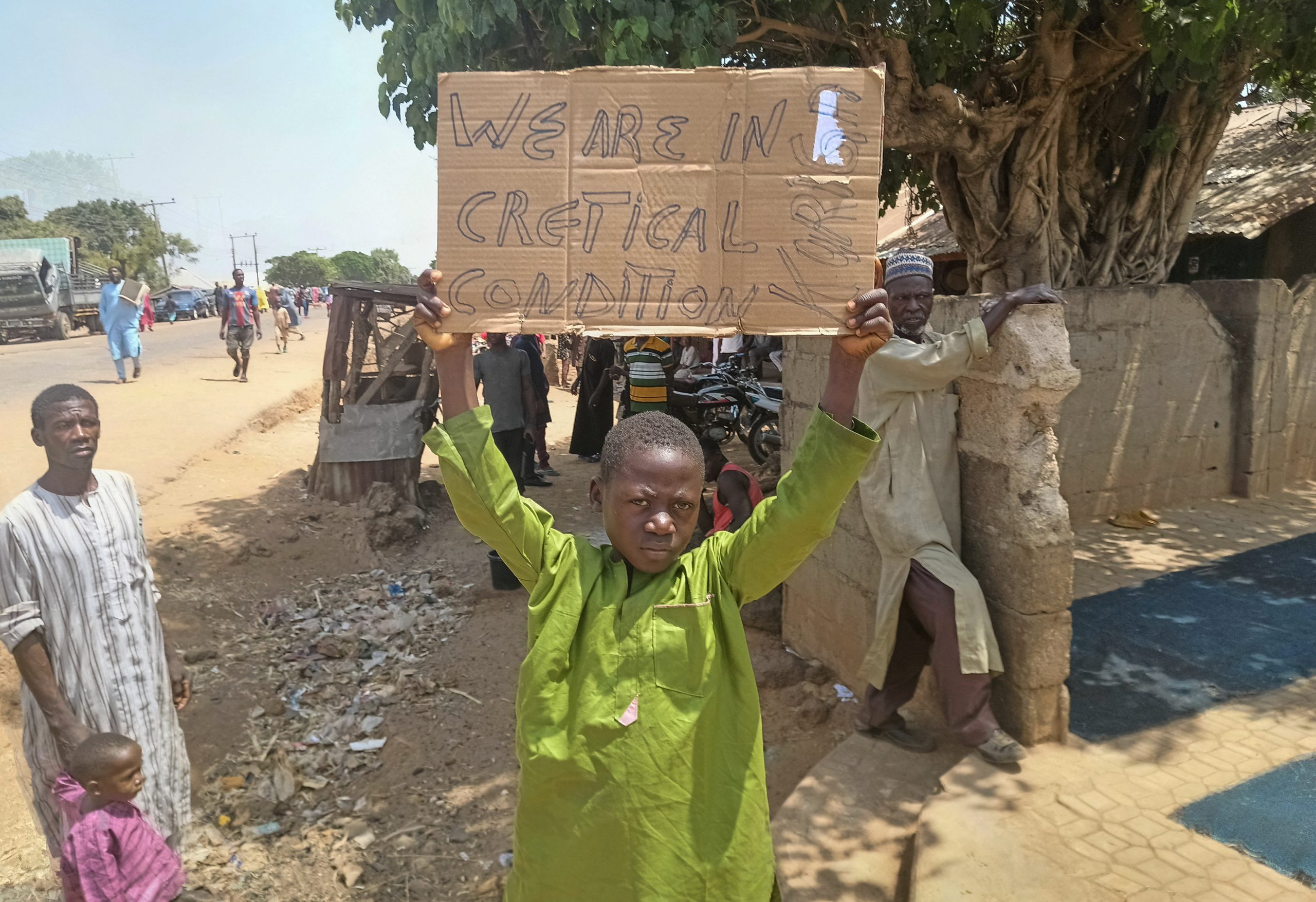

Governments in Nigeria have paid over ₦8 billion in ransom linked to school abductions between 2014 and 2025, according to a new analysis by SBM Intelligence, a Lagos-based geopolitical research and consulting firm. The report, titled “Monkey Business: Timeline of Nigeria’s Government Funding of School Abductions (2014–2025)”, warns that these payments may have reinforced a vicious cycle that continues to make schools attractive targets for armed groups across the country, transforming kidnapping into a structured criminal economy with devastating economic consequences.
The timeline compiled by SBM Intelligence tracks publicly reported ransom payments following major school kidnapping incidents over the past decade, illustrating how ransom payments have gradually become embedded in the response to mass school abductions, despite Nigerian law formally prohibiting negotiations with kidnappers. The pattern suggests that the state, through its actions, has become a significant financier of the very criminal networks it seeks to dismantle.
A Decade of Payments, A Growing Economy
The analysis begins with the 2014 abduction of 276 schoolgirls from Chibok in Borno State, one of the most widely known kidnapping incidents in Nigeria’s history. According to the report, approximately ₦5 billion was reportedly paid as part of negotiations following that single incident. In the years that followed, similar attacks occurred across several northern states, with ransom payments frequently reported as part of efforts to secure the release of abducted students.
In 2020, the Government Science Secondary School in Kankara, Katsina State, was attacked, with 276 students kidnapped. The report notes that about ₦30 million was reportedly paid following the incident. A series of attacks in 2021 further highlighted the scale of the crisis. In Niger State, about ₦50 million was reportedly paid after around 200 children were abducted from a school in Rafi Local Government Area. Another kidnapping in the same state that year resulted in the abduction of 42 people, with about ₦15 million reportedly paid.
That year also saw the kidnapping of 39 students in Igabi Local Government Area of Kaduna State, where about ₦32 million was reportedly paid to secure their release. In Zamfara State, 279 female students were abducted from Government Girls Secondary School in Jangebe, with reports suggesting that about ₦60 million was paid following the incident.
More recent incidents involved significantly higher ransom demands. In March 2024, about 287 pupils were abducted in Kuriga, Chikun Local Government Area of Kaduna State. The analysis indicates that about ₦1 billion was reportedly paid in connection with the case. The following year, in 2025, about 327 pupils were kidnapped in the Papiri area of Agaie Local Government Area in Niger State, with approximately ₦2 billion reportedly paid following the abduction.
The issue returned to national attention in February 2026, following an investigation by Agence France-Presse (AFP), which alleged that ₦2 billion (about $7 million) was paid to secure the release of abducted pupils from St Mary’s Catholic School in Gwoza, Borno State. According to the report, the money was allegedly delivered by helicopter to a Boko Haram commander. The investigation also claimed that two militant commanders were freed as part of the negotiations. The Nigerian government has strongly denied the allegations.
The Economics of the Kidnap Industry
The SBM analysis reveals a disturbing trend: ransom demands have escalated dramatically over the decade. From the ₦5 billion associated with Chibok to the ₦2 billion reportedly paid for the Gwoza victims, the scale of payments has grown exponentially. This escalation suggests that criminal networks have learned that schools are high-value targets capable of generating substantial revenue, and that governments are willing to pay.
The economic logic is brutal and self-reinforcing. Each successful ransom payment provides capital that armed groups use to purchase weapons, recruit fighters, and expand their operational capacity. The payments also signal to other criminal networks that school abductions are a viable revenue stream, encouraging emulation and competition. The result is a proliferation of attacks that spreads insecurity across an expanding geographic area.
For Nigeria’s broader economy, the costs extend far beyond the direct ransom amounts. Each attack disrupts education for thousands of children, compromising the human capital development essential for long-term economic growth. Communities living under the threat of abduction withdraw children from school, reducing enrollment and perpetuating poverty. Businesses in affected areas face reduced productivity as fear constrains economic activity. Security forces are stretched thin, diverting resources from other priorities.
Fiscal Drain and Policy Deadlock
The ₦8 billion in documented payments represents a direct drain on public finances that might otherwise fund schools, hospitals, and infrastructure. However, analysts suggest the actual figure may be substantially higher, as many payments occur without public disclosure. The pattern raises fundamental questions about fiscal accountability and the effectiveness of current counter-insurgency strategies.
The government’s strong denial of the recent Gwoza allegations reflects the political sensitivity of the issue. Acknowledging ransom payments would expose the state to criticism from multiple quarters: those who argue that paying incentivises further kidnappings, and those who demand that every effort be made to secure the release of abducted citizens. This policy deadlock leaves authorities with few good options and perpetuates the cycle SBM’s report documents.
Confidence McHarry, an analyst at SBM Intelligence, notes that the pattern documented in the report reflects a deeper governance failure. “When the state becomes a consistent payer of ransom, it essentially subsidises the kidnap industry,” he explains. “The funds that should be building schools end up financing the very groups that attack them. Breaking this cycle requires not just security operations but a fundamental rethink of how we respond to abduction incidents.”
The Human Capital Cost
Beyond the immediate fiscal impact, each kidnapped child represents a loss of future economic potential. The trauma of abduction affects educational outcomes, mental health, and future productivity. Families forced to sell assets to contribute to ransom payments lose generational wealth. Communities that live under constant threat experience reduced investment, lower agricultural productivity, and out-migration of skilled workers.
For Nigeria’s economy, the cumulative effect is a drag on growth that compounds over time. The regions most affected by school abductions—the northwest and northeast—are also areas with significant agricultural potential and growing populations. Insecurity prevents these regions from contributing their full economic potential, perpetuating poverty and dependency.
As attacks on schools spread across northern Nigeria in recent years, many communities have increasingly viewed educational institutions as vulnerable targets due to weak security and limited state presence. The SBM report concludes that without fundamental changes in response strategy, schools will remain attractive targets, and the kidnap economy will continue to grow, extracting ever greater economic and human costs from the nation.