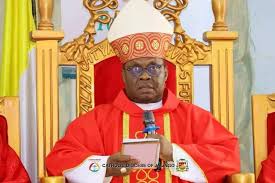

The Catholic Diocese of Jalingo has launched a proactive initiative to combat electoral irregularities and promote democratic integrity in Taraba State ahead of the 2027 general elections. Announced during the Diocese’s 22nd Biennial General Assembly on Monday, March 2, 2026, the movement seeks to establish a principled partnership between the Church and the State to ensure that future political processes are transparent, just, and reflective of the people’s will.
The structural and moral consequence of this initiative is rooted in the Church’s concern over Nigeria’s historically “contentious and flawed” electoral history. Under the theme “Church–State Partnership for Credible Election in Taraba,” the Bishop of Jalingo, Most Rev. Charles M. Hammawa, clarified that while a constitutional separation exists between religious and state institutions, both must collaborate to ensure peaceful coexistence. The Bishop emphasized that the Church’s role is not to endorse specific candidates but to challenge government agencies to conduct elections without fear or favor.
Analytically, the Diocese is focusing on extensive voter education and grassroots mobilization. Rt. Rev. Prof. Msgr. Cletus T. Gotan, Vicar General of the Archdiocese of Jos, presented a paper during the assembly calling for a total rejection of vote-buying, which he described as a “betrayal of dignity.” By targeting the 2027 cycle early, the Church aims to mentor youths against political manipulation and violence, effectively shielding vulnerable demographics from being weaponized by ethnic or religious interests.
The impact on “Civic Responsibility and Governance” represents a vital dimension of this partnership. Bishop Hammawa noted that the Social Teaching of the Church makes the education of the faithful on their political rights and duties an “indispensable priority.” This strategic enlightenment is designed to hold the Independent National Electoral Commission (INEC) and security agencies accountable, ensuring that the entire electoral timeline from registration to post-election adjudication is scrutinized through a lens of integrity and justice.
Furthermore, the initiative has received high-level political and traditional endorsement. Governor Agbu Kefas, represented by the Secretary to the State Government, Chief Gibon Kataps, praised the Catholic Church for its vision in redefining governance in Taraba. Former Governor Jolly Nyame and various traditional rulers also attended, signaling a broad-based consensus that the Church can serve as a non-partisan, unifying force capable of stabilizing the state’s political climate.
The long-term outlook for Taraba’s democracy suggests a shift toward more inclusive and transparent governance if this partnership holds. By maintaining its independence while providing a moral compass for the state, the Jalingo Diocese is positioning itself as a critical watchdog for the 2027 polls. For the citizens of Taraba, this clerical intervention offers a layer of protection against the disenfranchisement and irregularities that have characterized previous transitions of power.