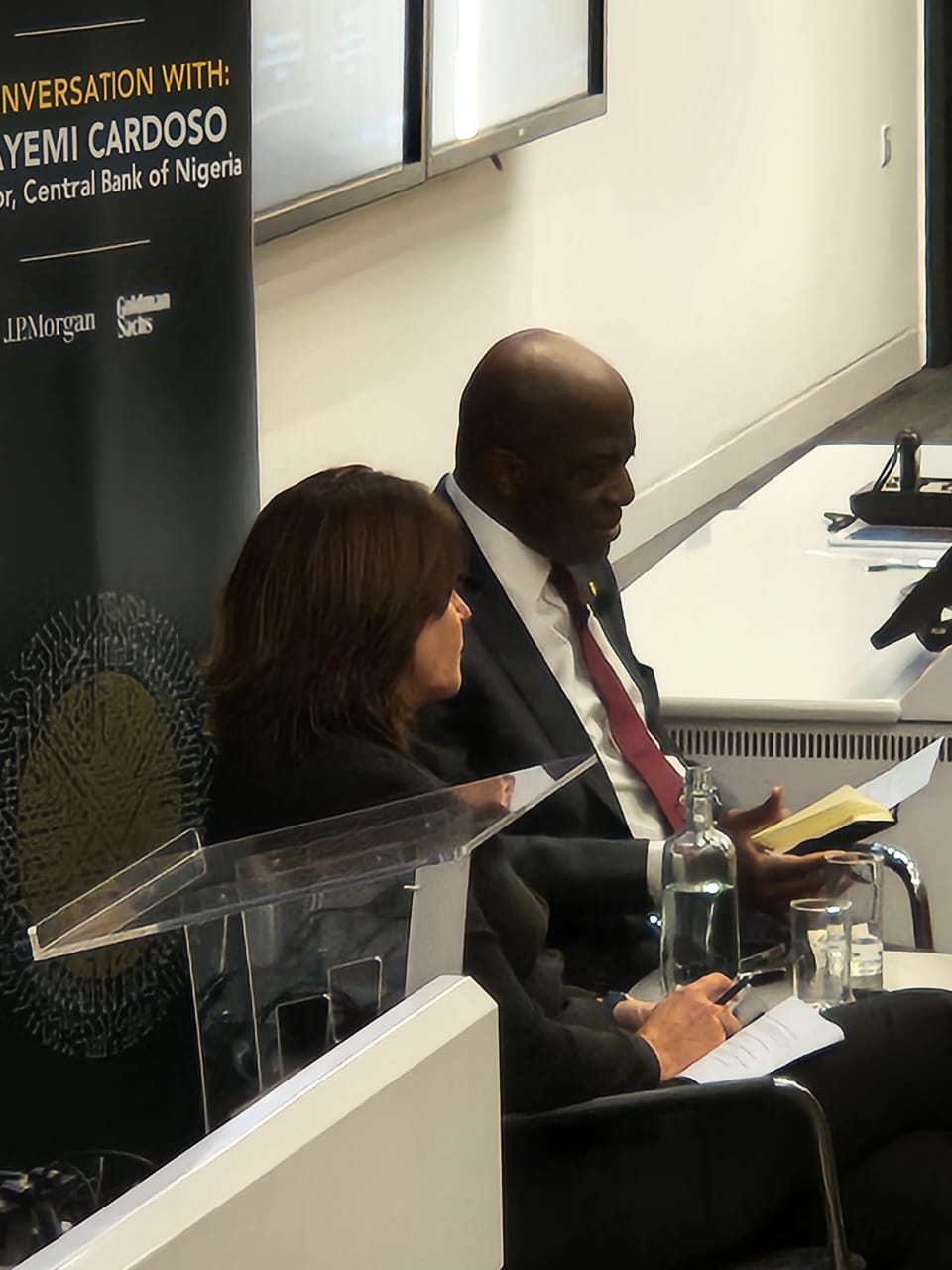

Central Bank of Nigeria (CBN) Governor Olayemi Cardoso’s revelation that the country’s net foreign exchange reserves stood at $34.8 billion as of December 2025—surpassing the $33.2 billion gross reserves recorded in December 2023—marks a significant departure in how monetary authorities communicate Nigeria’s external position. This distinction between net and gross reserves, articulated during a recent International Monetary Fund (IMF) event in Morocco, offers investors and multilateral partners a clearer lens through which to assess the nation’s true external liquidity and its capacity to meet near-term obligations.
From a sovereign risk perspective, the emphasis on net reserves addresses a long-standing investor critique regarding the opacity of Nigeria’s external buffers. By netting out forward liabilities, currency swaps, and other commitments, the disclosed figure of $34.8 billion provides a more accurate picture of readily available resources. This transparency initiative aligns with the Cardoso-led CBN’s broader strategy to rebuild credibility following years of policy unpredictability and multiple exchange rate windows. For global capital markets, clarity on net reserves reduces the information asymmetry that has historically complicated risk pricing for Nigerian assets.
The fiscal and monetary implications extend beyond optics. A stronger net reserves position bolsters the CBN’s capacity to defend the naira without depleting buffers, supporting the bank’s ongoing effort to unify exchange rates and allow market forces to play a greater role. This is particularly critical as Nigeria services its external debt and seeks to attract foreign portfolio investment. The fact that net reserves now exceed the gross reserves of just over two years ago suggests that liability management—including the restructuring of expensive currency swap contracts—has strengthened the external sector’s foundation.
However, the disclosure also invites scrutiny of the composition of gross reserves, which by December 2025 had risen to $40.9 billion. The $6.1 billion differential between gross and net figures represents outstanding obligations that will require future foreign exchange outflows. Investors will now focus on the maturity profile of these liabilities and the sustainability of the reserves accumulation strategy, particularly given the lingering challenges in boosting non-oil exports and diversifying foreign exchange inflows away from hydrocarbon revenues.
Looking ahead, this enhanced transparency could support Nigeria’s case with multilateral institutions and credit rating agencies, potentially influencing borrowing costs and access to development finance. As the government pursues its fiscal consolidation objectives under the “Renewed Hope” agenda, maintaining and improving net reserves will require sustained reforms in the foreign exchange market, continued efforts to attract diaspora remittances through formal channels, and policies that encourage genuine capital inflows. The Cardeno’s communication shift, therefore, represents not just a technical disclosure but a deliberate signal that monetary governance is evolving toward greater accountability—a necessary condition for the investment climate improvements that Nigeria seeks.