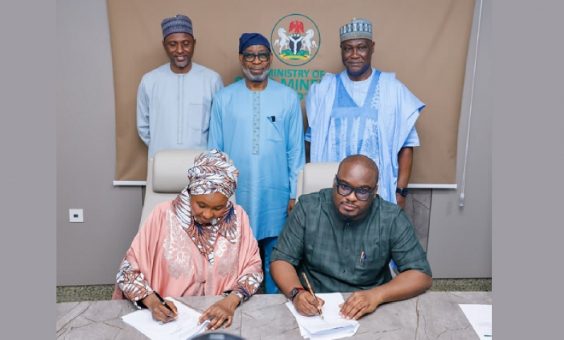

In a transformative move for Nigeria’s extractive industry, the Federal Government and the Africa Finance Corporation (AFC) have signed a landmark $1.3 billion Memorandum of Understanding (MoU) to co-finance a massive alumina refinery and mineral exploration initiative. Announced on Sunday, March 1, 2026, in Abuja, the agreement represents the single largest private investment in Nigeria’s mining history and a pivotal victory for the nation’s Foreign Direct Investment (FDI) goals.
The structural and economic consequence of this deal, executed through the Solid Minerals Development Fund (SMDF), is the establishment of a world-class alumina refinery. This facility is engineered to process one million tonnes of bauxite ore annually using a modern Bayer-process flowsheet, supported by an on-site gas-fired cogeneration plant for independent steam and power. With a projected 20-year operational lifespan at 95 per cent utilization, the refinery is expected to produce a total of 19 million tonnes of alumina, positioning Nigeria as a significant player in the global metals value chain.
Analytically, the project’s fiscal impact is staggering, with projections indicating a $1.2 billion annual contribution to Nigeria’s GDP. Over its entire lifecycle, the initiative is estimated to inject $25 billion into the national economy and generate $8 billion in foreign exchange earnings. Minister of Solid Minerals Development, Dr. Dele Alake, emphasized that the project’s commercial viability has been validated by rigorous feasibility studies conducted by the AFC and SMDF, effectively de-risking the sector for further international capital.
The impact on “Geoscience Data and Exploration” is a vital dimension of this partnership. Beyond the refinery, the MoU includes comprehensive geoscience mapping and the creation of a joint strategic investment vehicle. This entity is designed to accelerate the development of identified exploration leases, driving rapid production through data-backed exploration campaigns. By generating “big data” on specific minerals, the Ministry aims to unlock the full potential of Nigeria’s underground wealth and transition the sector from artisanal activity to industrial-scale mining.
Furthermore, the bureaucratic execution of the deal has been placed on a fast track. Dr. Alake has already granted all necessary approvals and directed relevant agencies to ensure the seamless processing of permits and regulatory clearances. Hajia Fatima Shinkafi, Executive Secretary of the SMDF, described the milestone as unprecedented, noting that it fulfills the administration’s “Seven-Point Agenda” to prioritize value addition ensuring raw minerals are processed within Nigeria rather than exported in their crude form.
The long-term outlook for the Nigerian mining sector suggests a shift toward global competitiveness. The involvement of the AFC, represented by President/CEO Samaila Zubairu, lends international institutional credibility to Nigeria’s mineral licensing regime. As the project moves from the MoU stage to active construction, it stands to put Nigeria on the global mining map, providing a sustainable alternative to oil revenue and fostering a new era of industrialization fueled by the country’s own natural resources.