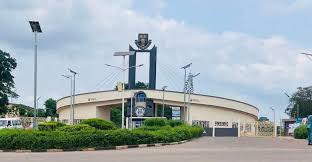

The Midstream and Downstream Gas Infrastructure Fund (MDGIF) has inaugurated a Compressed Natural Gas (CNG) refuelling facility at Obafemi Awolowo University, marking a significant step in efforts to deepen domestic gas utilisation within Nigeria’s tertiary institutions.
The facility, unveiled in Ile-Ife, Osun State, is part of a broader rollout targeting 20 federal universities through equity partnerships with private investors. Stakeholders say the initiative aligns with the Federal Government’s push to accelerate gas adoption following the 2023 petrol subsidy removal.
In a statement released on Sunday, MDGIF Executive Director Oluwole Adama described the project as a strategic milestone in the country’s transition to cleaner fuels.
“This project represents more than the commissioning of a refuelling station. It symbolises progress, partnership, and purpose in advancing Nigeria’s energy transition, promoting cleaner fuels and deepening domestic gas utilisation in line with national energy objectives.
“As you may be aware, MDGIF was established to catalyse investments in midstream and downstream gas infrastructure across the country through equity partnerships with private investors.
“Our mandate is clear: to support projects that unlock gas value chains, improve gas access, enhance environmental sustainability, and deliver tangible socio-economic benefits to Nigerians.”
Adama noted that the OAU project is one of 20 similar CNG infrastructure developments being implemented in partnership with FEMADEC Energy Limited.
Unlike conventional city-based CNG stations, the university facility combines refuelling services, vehicle conversion, and campus transport deployment within a structured academic environment. The model is expected to serve as a pilot for broader national expansion.
Vice-Chancellor Prof. Adebayo Simeon Bamire said the facility would position the university as a hub for research and innovation in alternative fuels.
“This project is designed to serve both the university and the surrounding community. It will foster research opportunities, practical learning, and innovation in alternative fuels,” Bamire said.
“It will also strengthen relations between the university and the host community, promote sustainable transport, and create shared economic value.”
The Group Managing Director/Chief Executive Officer of FEMADEC Group, Akinnola Fola, reaffirmed the company’s commitment to expanding gas infrastructure nationwide.
“Our focus is to deliver safe, efficient, and scalable CNG infrastructure across Nigeria through strong collaboration between the public and private sectors,” Fola said.
“We see universities as critical anchors in the national gas expansion programme because they combine innovation, youth engagement, and community integration.”
To support campus mobility, the First Lady of Nigeria, Oluremi Tinubu, donated 50 CNG-powered buses to the institution, while PiCNG provided 10 CNG-powered tricycles.
Nigeria holds one of Africa’s largest proven gas reserves but continues to face domestic infrastructure gaps. By embedding CNG systems in universities, stakeholders believe the country can encourage behavioural change among young Nigerians while building scalable infrastructure models for urban centres.
Observers say the OAU project could serve as a test case for whether Nigeria’s gas transition ambitions can translate into practical, everyday adoption.