
Ghana’s licensed cocoa buyers owe banks as much as $750 million, deepening strain in a financial sector still recovering from the country’s recent debt crisis, while the government simultaneously launches a gold board initiative aimed at curbing smuggling and generating over $20 billion in annual inflows. The parallel developments highlight the structural challenges facing Ghana’s commodity-dependent economy and the policy experimentation underway to stabilise export revenues and protect financial stability.
The Licensed Cocoa Buyers Association of Ghana disclosed that its members borrowed heavily to pre-finance bean purchases amid delayed payments from the Ghana Cocoa Board (COCOBOD). The sector now owes between 7 billion and 8 billion cedis to banks and more than 2 billion cedis directly to farmers, creating a cascading liquidity crisis that threatens both rural livelihoods and bank balance sheets. Two consecutive poor harvests and falling global cocoa prices have compounded pressure on cash flows, leaving buyers unable to service loans and farmers unpaid for delivered beans.
The banking sector’s exposure to cocoa finance comes at a vulnerable moment. Ghana’s financial institutions are still navigating the aftermath of the domestic debt restructuring, with impaired capital positions and cautious lending appetites. Large-scale defaults by cocoa buyers would further erode bank balance sheets, potentially triggering additional provisioning requirements and constricting credit availability across the economy. The situation underscores the interconnected risks between agricultural value chains and financial stability in commodity-dependent economies.
Across the border, Ivory Coast has moved to resolve its own cocoa market dysfunction. Traders have resumed buying after the Coffee and Cocoa Council (CCC) agreed to sell mid-crop beans at prices aligned with global markets, ending a standoff that left hundreds of thousands of tons unsold. Forward purchases for the smaller mid-crop harvest, estimated at 400,000 to 450,000 tons, will proceed without premiums that had previously pushed prices $250 to $470 per ton above global futures. Authorities maintain the $400-per-ton Living Income Differential to protect farmer earnings, but the adjustment brings Ivorian offer prices closer to international realities.
Ivory Coast’s exports reached 1.011 million metric tons by February 20, slightly below the previous year’s pace. However, falling prices have slowed port arrivals and left unsold stockpiles inland and in warehouses. World cocoa prices have dropped roughly 50 percent this year, hitting near three-year lows and squeezing exporter margins. The policy adjustment aims to ease pressure on buyers and farmers, though the CCC is also considering trimming domestic prices further to maintain competitiveness against Ghana’s reduced rates.
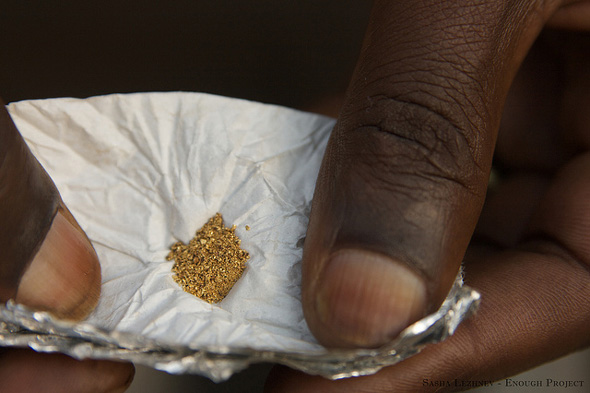
Separately, Ghana announced plans to channel approximately 127 metric tons of artisanal gold annually into formal trade through the newly established Ghana Gold Board. Finance Minister Cassiel Ato Forson stated the programme aims to curb widespread smuggling that has historically diverted production into informal channels, depriving the state of tax revenue and foreign exchange. The board will purchase gold from small-scale miners and sell proceeds to the Bank of Ghana, with projections of over $20 billion in annual inflows if fully implemented.
The gold initiative represents a strategic attempt to capture value from a sector where informal trade has long dominated. Artisanal gold mining employs hundreds of thousands of Ghanaians but operates largely outside formal systems, with production estimates suggesting only a fraction enters official export channels. By providing a transparent, reliable purchasing mechanism, the Gold Board aims to incentivise formalisation while simultaneously building central bank reserves and generating fiscal revenue.
For the Bank of Ghana, direct gold purchases offer a pathway to diversify reserve assets beyond volatile foreign currency holdings. Gold’s role as a store of value and hedge against currency depreciation has gained renewed attention globally, and accumulating domestic production into reserves strengthens the central bank’s balance sheet while supporting the local currency. The projected $20 billion in annual inflows, if realised, would substantially exceed current gold export earnings and transform the sector’s contribution to national income.
The parallel developments in cocoa and gold reflect Ghana’s struggle to stabilise its commodity sectors amid global price volatility and domestic structural constraints. Cocoa, long the backbone of rural incomes and export earnings, faces mounting financial pressures as buyers struggle with debt and farmers contend with delayed payments. Gold offers promise as a stabilising force, but realising that potential requires overcoming entrenched informal trading networks and building institutional capacity in the new Gold Board.
Both sectors ultimately depend on the same foundational conditions: reliable financing, transparent pricing mechanisms, and policy consistency that enables long-term investment. Ghana’s recent debt crisis eroded confidence in financial institutions and constrained the lending capacity that commodity value chains require. Rebuilding that capacity while simultaneously reforming cocoa and gold sectors represents a complex policy challenge requiring coordinated action across agriculture, finance, and trade ministries.
For regional observers, the contrasting approaches of Ghana and Ivory Coast to cocoa market pressures offer lessons in policy adaptation. Ghana’s price cut, while painful for farmers, restored trader interest and cleared port stocks. Ivory Coast’s initial resistance to adjustment created stockpiles but ultimately required alignment with market realities. Both countries maintain the Living Income Differential as a floor for farmer earnings, but the mechanism’s effectiveness depends on global prices remaining above thresholds that permit its full application.
The coming months will test whether Ghana’s dual strategy of cocoa debt management and gold sector formalisation can stabilise export revenues and support economic recovery. Success would demonstrate that commodity-dependent economies can adapt to global price volatility through policy innovation and institutional strengthening. Failure would compound existing financial strains and deepen the structural challenges that have long constrained Ghana’s economic transformation.