


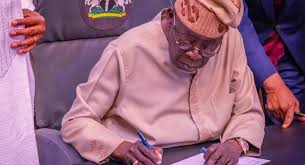

The Budget Office of the Federation has stated that Nigeria’s continued borrowing to fund its budget should not be seen as a weakness, noting that many countries rely on borrowing to bridge fiscal gaps as part of normal budget management. The Director of Expenditure (Social), Yusuf Muhammed Kurawa, made the remarks in Kano shortly after giving out his daughters in marriage over the weekend.
“There’s nothing bad about borrowing. Countries all over the world borrow. What matters is how it is managed. Nigerians should remain patient; the President is on top of the situation,” he said. Kurawa identified fiscal constraints as a major challenge in Nigeria’s budget cycle but expressed optimism that ongoing reforms by the administration of President Bola Ahmed Tinubu are beginning to yield results. He stressed the importance of the budget, describing it as the most critical document after the constitution. “After the constitution, the next most important document is the budget. We are meticulous in the Budget Office. Everything is on course,” he added.
From an economic perspective, the government’s continued borrowing despite the removal of fuel subsidies in 2023 raises legitimate questions about the trajectory of fiscal policy. The subsidy removal was expected to free up significant resources for other priorities, including capital investment and social spending. However, the Budget Office’s admission that borrowing continues suggests that the fiscal gap remains wide, and the savings from subsidy removal have been absorbed by other pressures, including debt servicing costs, increased security spending, and the impact of exchange rate unification on budget assumptions.
The Director’s framing of borrowing as a normal feature of budget management is technically accurate. Many countries, including advanced economies, borrow to finance deficits. However, the sustainability of borrowing depends on the cost of debt, the use of borrowed funds, and the growth trajectory of the economy. Nigeria’s debt service to revenue ratio, which has consistently exceeded 60 per cent, remains a concern for fiscal sustainability. Borrowing to finance consumption rather than investment, or to service existing debt, can become a cycle that is difficult to break.
The Budget Office’s call for patience reflects an understanding that the administration’s reforms are structural and may take time to yield visible results. The unification of exchange rates, removal of subsidies, and tax reforms are intended to create a more efficient and productive economy. However, the transition period has been painful for households and businesses facing higher costs. The government’s ability to manage expectations while continuing reforms will be critical to maintaining public support.
As the 2026 budget implementation progresses, the focus will be on whether borrowed funds are directed toward productive infrastructure and human capital development, or whether they are absorbed by recurrent expenditure and debt service. The Budget Office’s meticulousness, as claimed by Kurawa, will be tested by outcomes, not by processes. Nigerians will judge the government by whether they see tangible improvements in roads, power, healthcare, education, and security.


