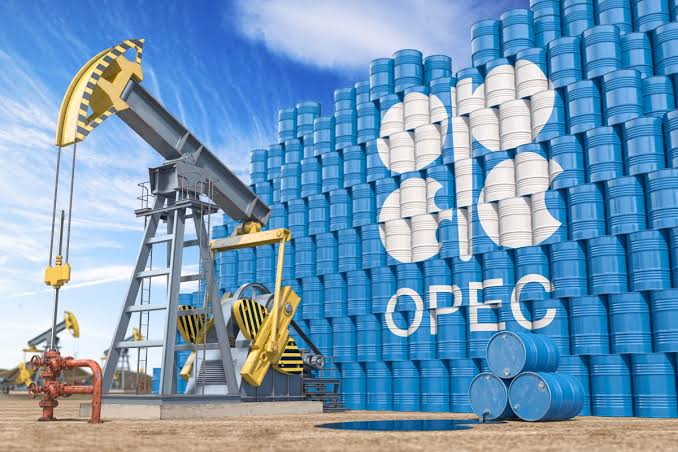

The United Arab Emirates’ decision to distance itself further from the Organization of the Petroleum Exporting Countries (OPEC) underscores growing fractures within the oil-producing alliance and raises fresh questions about the cartel’s long-term ability to shape global crude prices.
The move reflects mounting tensions among major producers as national economic priorities increasingly outweigh collective production discipline. Analysts say the UAE’s position highlights a broader shift in the energy market, where OPEC’s once-dominant influence has been weakened by rising non-OPEC output, geopolitical disruptions, and changing patterns in global energy demand.
For decades, OPEC exercised significant control over oil markets by coordinating production cuts or increases among member states to stabilize prices. However, the group’s leverage has eroded in recent years as U.S. shale producers, Brazil, Guyana, and other emerging suppliers expanded output outside the cartel’s control.
The UAE, one of OPEC’s largest and most financially resilient producers, has invested heavily in expanding its production capacity and increasingly appears reluctant to restrain output to support higher prices. Industry observers say the country is seeking greater flexibility to maximize revenue and market share amid intensifying competition in the global energy sector.
The development comes at a delicate moment for oil markets. Crude prices have remained volatile due to slowing economic growth in key economies, uncertainty surrounding Chinese demand, and geopolitical risks affecting major shipping routes and energy infrastructure.
Energy traders are also closely watching the cohesion of the broader OPEC+ alliance, which includes Russia and several non-OPEC producers. While coordinated supply cuts helped support prices during periods of weak demand, compliance among member states has become increasingly uneven.
“The challenge for OPEC is no longer simply managing supply,” said one energy market analyst. “It is maintaining unity among producers with diverging economic and strategic interests.”
The UAE’s stance may encourage other producers to push for more favorable production quotas or adopt more independent strategies. That could further dilute OPEC’s pricing power and complicate efforts to stabilize the market during future downturns.
Investors and policymakers are likely to interpret the development as another sign that the global oil market is entering a more fragmented era. Instead of relying primarily on OPEC decisions, prices are now being shaped by a wider range of forces, including technological advances in drilling, energy transition policies, and geopolitical realignments.
Despite these challenges, OPEC still retains substantial influence because its members control a significant share of global oil reserves and production capacity. However, the UAE’s evolving position signals that the organization’s ability to act as a unified price-setting force may continue to weaken in the years ahead.