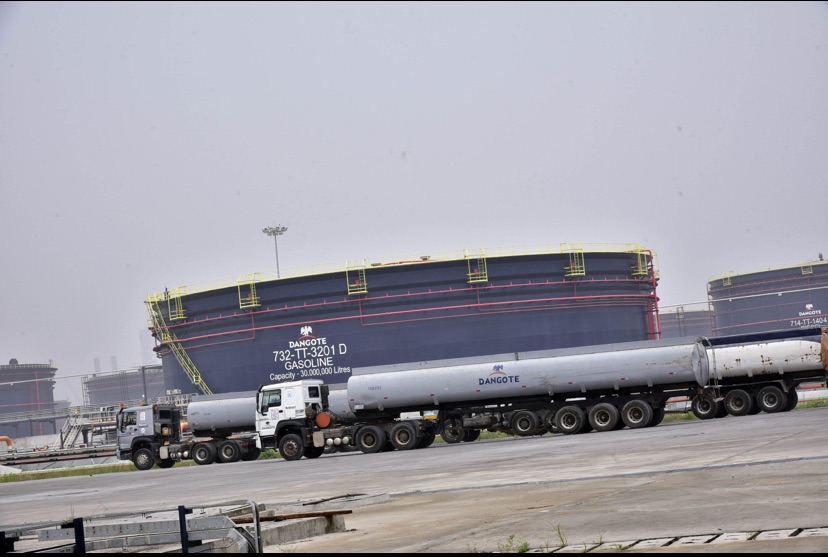

Owners of petroleum jetties and tank farms in Nigeria have called on the Federal Government to stop issuing new petrol import licences, insisting that local refineries now have enough capacity to meet the country’s fuel needs.
The appeal was made by the Jetties and Petroleum Tank Farm Owners of Nigeria (JETFON), which also distanced itself from the position earlier taken by the Depot and Petroleum Products Marketers Association of Nigeria (DAPPMAN).
The disagreement comes amid an ongoing legal battle involving the Dangote Petroleum Refinery and fuel marketers over the continued importation of petrol into Nigeria.
Recently, the Dangote Refinery approached the Federal High Court in Lagos, asking the court to cancel newly issued petrol import licences. The refinery argued that the licences violated an earlier court ruling and also went against provisions of the Petroleum Industry Act.
According to Dangote Refinery, fuel importation should only happen when local refineries cannot produce enough to satisfy domestic demand. The company maintained that Nigeria now has the refining capacity needed to supply the local market and that continuous import approvals are harming local investments.
In response, DAPPMAN argued that allowing only one major refinery to dominate the market could create a monopoly. The marketers said competition is necessary to keep the downstream petroleum sector stable and healthy.
The association also warned that cancelling existing import licences could negatively affect businesses that invested heavily in fuel storage facilities, transportation, and distribution networks based on the approvals already granted by regulators.
However, JETFON said it does not share the same opinion with DAPPMAN on the matter.
In a statement released through its Executive Secretary, Olayiwola Temitope, the association stated that Nigeria’s growing refining capacity, especially with the operations of the Dangote Refinery and other local plants, is enough to satisfy local fuel demand.
The group therefore urged the Federal Government and the Nigerian Midstream and Downstream Petroleum Regulatory Authority (NMDPRA) to immediately halt the issuance of fresh import permits and cancel existing licences.
According to the tank farm owners, continued fuel importation weakens local production, discourages investment, and places unnecessary pressure on Nigeria’s foreign exchange reserves.
They explained that depending on imported refined products exposes the country to global supply chain disruptions, shipping delays, and rising international costs that can further weaken the naira.
JETFON added that prioritising local refining would help Nigeria build a stronger and more independent fuel supply system while also boosting industrial growth and job creation.
The association also referred to the latest April 2026 supply report released by the NMDPRA to support its argument.
The report showed that Nigeria’s daily petrol consumption increased from 47.3 million litres in March to 51.1 million litres in April 2026.
Despite the rise in consumption, petrol imports reportedly dropped sharply by 37.3 percent during the same period. Fuel imports fell from 5.9 million litres daily in March to 3.7 million litres per day in April.
At the same time, local refining output — mainly driven by the Dangote Refinery — supplied about 40.7 million litres of petrol daily to the Nigerian market.
The figures, according to JETFON, prove that local refineries are increasingly capable of meeting national fuel demand without relying heavily on foreign imports.