


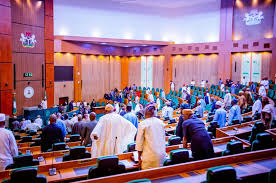

The Senate has been plunged into a heated constitutional debate following Senate President Godswill Akpabio’s defense of the removal of a clause requiring the real-time electronic transmission of election results. The controversy intensified when former Senate President David Mark issued a stern warning to the upper chamber, cautioning lawmakers against “usurping” the powers of the Independent National Electoral Commission (INEC) by legislating its internal technical processes. For the Nigerian economy, this legislative friction creates a “transparency deficit” that directly impacts investor sentiment; the lack of a legally binding, real-time results framework is viewed by global markets as an “electoral risk” that can trigger capital flight and lower the country’s democratic rating.
The economic consequence of this legislative ambiguity is the potential for protracted post-election litigation, which historically stalls government spending and halts the execution of capital projects. In Nigeria, election years typically see a 30-40% dip in foreign equity inflows as investors price in the “uncertainty of transition.” By removing the mandate for real-time transmission, the Senate is perceived to be widening the gap for human interference, a move that rating agencies like Fitch and Moody’s monitor closely when assessing Nigeria’s “Institutional Strength.” A clouded electoral process translates into a higher “sovereign risk premium,” making it more expensive for the federal government to borrow on international capital markets.
Analytically, Senate President Akpabio’s stance rests on the argument of “technological feasibility,” suggesting that the law must not set an impossible standard for areas with poor internet penetration. However, Senator David Mark’s counter-argument emphasizes that the Senate must not be seen as a “spokesperson” for the electoral umpire. From a legal perspective, the debate centers on whether the Electoral Act should be “prescriptive” or “permissive.” If the law remains vague, it leaves the burden of transparency to the discretion of INEC officials, a scenario that critics argue led to the logistical and perceptual challenges of the 2023 polls.
The impact on “Democratic Trust” is a vital dimension of this standoff. The Nigeria Labour Congress (NLC) and other civil society groups have already signaled that a “manual-first” approach is no longer acceptable to a digitally-aware populace. For the Nigerian business environment, this trust is a prerequisite for stability. When the legitimacy of a government is questioned due to opaque result transmission, it often leads to civil unrest, which disrupts supply chains and reduces the “man-hours” available for productive economic activity. The Senate’s current path risks alienating the “Gen Z” and “Millennial” demographics the primary drivers of Nigeria’s digital economy who view real-time transmission as a non-negotiable standard.
Furthermore, the warning from David Mark highlights a potential “Constitutional Overreach.” By attempting to shield INEC from the “real-time” requirement, the Senate may inadvertently be weakening the commission’s independence. For the Renewed Hope administration, this legislative friction is counterproductive to the goal of positioning Nigeria as a destination for “Patient Capital.” Investors seeking 10-to-20-year horizons require a political system that is “technologically locked” against manipulation. A transparent, real-time results system serves as the “blockchain of democracy,” providing the immutable record needed to satisfy both local voters and international observers.
The long-term economic outlook for the Nigerian federation hinges on the National Assembly’s ability to provide a “Legal Framework of Certainty.” As the debate over the 2027 electoral roadmap continues, the focus must shift from political convenience to institutional integrity. For Nigeria to achieve its trillion-dollar GDP target, it must first secure its “Electoral Infrastructure.” Ensuring that every vote is not only counted but seen to be counted in real-time is the ultimate safeguard against the economic paralysis that follows contested power transitions.


