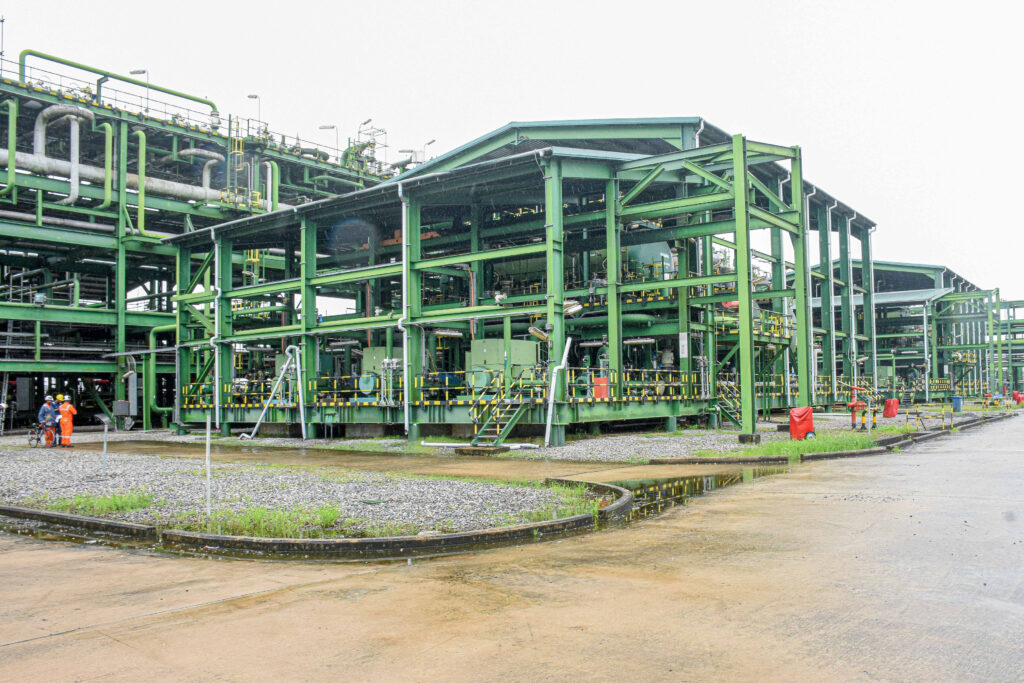

Renaissance Africa Energy Company Limited has inaugurated six projects in oil spill-impacted communities in Eleme Local Government Area of Rivers State, marking a shift toward a collaborative approach to community development following a major pipeline spill. The projects include a 12-classroom block in Agbonchia community, a 200-capacity town hall in Akpajo community, ICT upgrades, back-up power supply and renovation work at Community Secondary School Aleto.
Other projects include the desilting of a four-kilometre drainage system in Aleto community, as well as electricity upgrades and the installation of prepaid meters in Aleto and Okerewa communities. Speaking at the event in Agbonchia on Friday, Igo Weli, Vice President of Relations and Sustainable Development at Renaissance, said the projects resulted from engagement with the Eleme communities following the 11 June 2023 oil spill on the Nkpoku-Bomu pipeline, previously operated by Shell Petroleum Development Company.
“After the spill, Renaissance Africa developed a strategy different from what obtains in many communities in the Niger Delta region. We adopted a collaborative approach, resulting in the completion of pipeline repairs and recovery of spilled crude oil,” Weli said. He added that further clean-up of impacted areas had reached the implementation stage. He explained that after Renaissance acquired SPDC, the company signed a Memorandum of Understanding with the Aleto community on 6 August 2024 for a one-off goodwill grant to fund development projects.
From an economic and institutional perspective, the projects represent a shift from the traditional adversarial relationship between oil companies and host communities toward a partnership model. For the affected communities, infrastructure such as schools, drainage systems, and electrification directly supports human capital development and economic activity. For Renaissance, meeting community development obligations reduces operational risks and improves the investment climate in the Niger Delta, where oil production remains central to government revenues and foreign exchange earnings.