

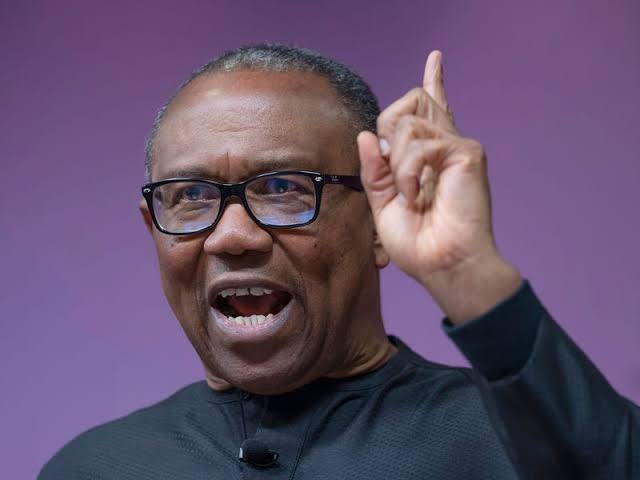
Peter Obi, the Labour Party presidential candidate in the 2023 elections, has faulted the Federal Government’s approval of $1 billion (about ₦1.5 trillion) for the modernisation of the Apapa and Tin Can Island ports in Lagos, describing the move as a misplaced priority that sidelines other critical maritime hubs in the country.
In a statement shared on his X handle on Friday, Obi said while investing in port infrastructure is necessary for efficiency and trade, the focus on Lagos alone reflects Nigeria’s long-standing failure to distribute economic development equitably across its regions.
According to him, “Nigeria’s infrastructure investment remains excessively concentrated in Lagos, often at the expense of other strategic ports such as Warri, Port Harcourt, Calabar, and Onne.”
Neglect of other ports fuelling high costs and poor logistics
Obi warned that the continuous neglect of other ports has wide-reaching consequences for ordinary Nigerians, including higher transport costs, rising food prices, and inflated logistics expenses that affect the final price of goods in markets across the country.
“The more we centralise port activities in Lagos, the more we increase congestion, delay cargo clearance, and push up demurrage charges,” he explained. “These costs are ultimately passed down to the consumer — the market woman, the trader, and the family trying to make ends meet.”
He added that if the ports in Warri, Calabar, Port Harcourt, and Onne were fully developed and functional, they could serve as new economic corridors, boosting trade, creating jobs, and reducing poverty across multiple regions.
Lessons from other countries
Drawing comparisons with nations such as Vietnam, Indonesia, Egypt, and Ghana, Obi noted that successful maritime economies distribute port development to ensure nationwide growth and connectivity.
“No country seeking to maximise its blue economy concentrates all maritime activities in a single city,” he said. “Decentralisation reduces congestion, improves logistics, enhances national security, and promotes balanced growth.”
Currently, over 70 percent of Nigeria’s port activities are concentrated in Lagos, leading to chronic gridlock, pollution, and logistical bottlenecks that increase the cost of doing business.
Call for reforms and fair distribution of investment
The former Anambra State governor urged the Federal Government to invest in other coastal ports as a matter of national urgency. He said revitalising these ports would cut shipping costs, attract investment, create jobs, and spur development in the South-South and South-East regions.
Obi also called for structural reforms in the maritime sector, including digitalisation to reduce paperwork, streamline bureaucracy, and combat corruption.
“If prudently managed, the Lagos modernisation project could be a model for broader maritime transformation,” he said. “But it must not become another project that deepens inequality and regional imbalance.”
He concluded by reiterating that Nigeria’s development agenda must be guided by fairness and integrity, driven by a vision to transform the economy “from one of consumption to one of production and shared prosperity.”


