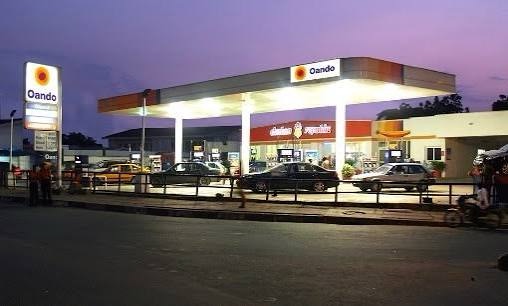

Nigeria may earn more revenue from crude oil exports following rising tensions in the Middle East, according to indigenous oil company Oando PLC.
The company’s Group Chief Executive, Wale Tinubu, said the ongoing conflict involving Iran has created uncertainty around oil production and transportation in the Gulf region, especially around the Strait of Hormuz, one of the world’s most important oil shipping routes.
Speaking during an interview with Bloomberg TV at the Africa CEO Forum in Kigali, Tinubu explained that the crisis has weakened the Middle East’s long-standing reputation as a secure environment for hydrocarbon production.
According to him, countries and buyers that once depended heavily on Middle Eastern oil are now looking for more stable suppliers. This shift is expected to benefit oil-producing nations like Nigeria.
Tinubu noted that Oando has already started seeing increased interest from customers in Europe and Asia who are searching for reliable energy sources outside the troubled Gulf region.
He also predicted that global crude oil prices would likely remain between $70 and $80 per barrel for some time, even after the conflict ends. He explained that damaged infrastructure and disrupted production in affected countries would take time to recover fully.
The Oando boss said the company currently produces an average of 32,500 barrels of oil per day. However, the firm is planning to increase production significantly before the end of the year.
As part of its expansion strategy, Oando plans to drill seven additional oil wells in 2026. The project is expected to add another 10,000 barrels of oil per day to the company’s production output.
To finance its future projects and acquisitions, the company also intends to raise up to $750 million through a combination of debt financing and equity investments over the rest of the year.
Beyond Nigeria, Oando is expanding its footprint across Africa and other emerging oil regions. The company recently secured a production-sharing contract in Angola for an onshore oil block located in the Kwanza Basin.
Tinubu added that Oando is also exploring investment opportunities in other parts of West Africa, as well as oil-rich countries such as Guyana and Suriname.
Industry analysts believe Nigeria could benefit if global buyers continue diversifying away from the Middle East. Higher oil prices and stronger export demand may also improve government revenue and foreign exchange earnings.
However, experts warn that Nigeria must improve security, infrastructure, and production efficiency in the Niger Delta to fully take advantage of the opportunity created by the global energy market changes.