Nigeria’s economy grew by 3.98 per cent in the third quarter of 2025, a modest uplift from the 3.86 per cent recorded in Q3 2024.
This expansion, according to the National Bureau of Statistics (NBS), reflects broad-based growth across key sectors. While the services sector remains the largest contributor, agriculture and industry also posted strong gains, signaling a gradual recovery of multiple economic engines.
In real terms, the nation’s total output rose to ₦57.03 trillion in Q3 2025, up from ₦54.85 trillion in the same period last year.
On the services front, gains came from trade, telecommunications, finance, real estate and other tertiary activities. Meanwhile, better harvests buoyed agriculture; manufacturing, construction and industry added modest but positive contributions.
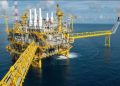
Even the oil sector, long Nigeria’s dominant economic engine, contributed, with real growth around 5.84 per cent and average daily crude production estimated at 1.64 million barrels per day. Still, oil’s share of GDP remains relatively small, underscoring a longer-term shift toward a more diversified economy.
The increase though modest, suggests resilience despite recent economic headwinds. It highlights that Nigeria’s growth is no longer solely dependent on oil: non-oil sectors are increasingly pulling the weight.
The 3.98 % growth in Q3 comes as inflation remains elevated and monetary policy tight, yet non-oil sectors like agriculture, services, ICT and manufacturing show resilience. This diversification could strengthen Nigeria’s economic stability, reduce vulnerability to oil shocks, and attract more investment if sustained over the long term.