

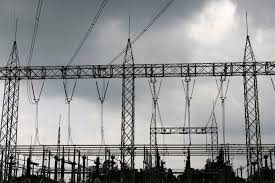
Nigeria is negotiating with China’s Export-Import Bank for a $2 billion loan to finance a new “super grid” designed to tackle chronic power shortages that have constrained economic growth for decades. The grid will serve the eastern and western regions, where most industrial consumers are concentrated, according to Nigeria’s Minister of Power, Adebayo Adelabu. Speaking at an economic summit in Abuja, Adelabu described the project as a key step in decentralising power generation, encouraging heavy commercial users who previously abandoned the national grid due to unreliability to return, and ensuring a more stable electricity supply for industrial hubs.
Discussions with China Eximbank are reportedly progressing, with cabinet approval already secured for the financing. Nigeria currently generates around 13 gigawatts, but the central grid can distribute only a third of this to over 200 million people, and outages are frequent. By comparison, South Africa, with a quarter of Nigeria’s population, has approximately 70 gigawatts of installed capacity. As a result, many firms rely heavily on self-generated electricity, which now accounts for nearly half of national consumption. The super grid aims to channel more of the generated power to industrial zones, reducing the reliance on costly private generation and enabling businesses to operate at full capacity.
The proposed infrastructure aligns with a suite of economic reforms initiated since President Bola Tinubu assumed office in 2023. These include removing fuel subsidies that historically strained government finances, overhauling tax laws to improve revenue collection, and increasing crude oil output through enhanced security in producing regions. The government has also moved to improve the financial viability of the power sector by allowing higher tariffs for some urban consumers, which led to a 70 per cent rise in power company revenues in 2024, with a projected 41 per cent increase this year to 2.4 trillion naira ($1.6 billion).
Analysts view the super grid as critical to restoring investor confidence in Nigeria’s industrial sector. Power reliability has long been a constraint, prompting firms to relocate, reduce output, or invest in expensive on-site generation. By improving grid stability in industrial regions, the project is expected to reduce these barriers, attract displaced users back to the national grid, lower production costs, and drive industrial growth. It also underscores the government’s intent to integrate energy infrastructure into broader economic development strategies.
Nigeria’s power sector has historically faced structural and operational limitations, including underinvestment, technical failures, and transmission bottlenecks. The decentralised approach underpinning the super grid is designed to mitigate these issues, ensuring that electricity reaches priority commercial and industrial areas efficiently. Improved distribution could support employment, raise productivity, increase tax revenues, and strengthen the competitiveness of Nigerian businesses in regional and global markets.
The project also fits into the broader push to modernise Nigeria’s infrastructure and reduce reliance on self-generated power, which is both costly and inefficient. With reliable electricity, sectors such as manufacturing, technology, and agro-processing can scale more confidently, unlocking productivity gains and creating opportunities for formal employment. Moreover, stable industrial power could attract new investors, particularly those who have historically bypassed Nigeria due to energy uncertainty.
If successfully implemented, the $2 billion super grid could redefine the dynamics of Nigeria’s energy and industrial landscape. It has the potential to draw displaced industries back onto the national grid, cut the reliance on expensive private generation, and catalyse efficiency gains across sectors. Beyond powering factories, it sends a clear signal to investors that Nigeria is addressing one of its most entrenched economic bottlenecks. For a country long constrained by unreliable power, this initiative could mark a turning point, laying the foundation for sustained industrial expansion, economic resilience, and inclusive growth for decades to come.