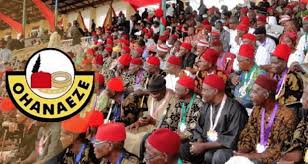

In a direct challenge to the Nigerian state’s legal and structural framework, the Ndi Igbo Worldwide Union has warned that the country is facing its “ultimate test” regarding the coexistence of Sharia and common law. In a statement released on Friday, February 27, 2026, signed by President Benjamin I. Nwankwo and Secretary Chief Charles Edemuzo, the Union asserted that recent pushback by Northern Islamic leadership against the repeal of Sharia criminal codes proves that the current Nigerian configuration is no longer sustainable.
The socio-legal and structural consequence of this friction, according to the Union, is an untenable dual-legal system that undermines national equality. The leadership argued that Nigeria cannot function as a modern, egalitarian nation while maintaining two conflicting legal codes. They suggested that Northern leaders must decide between a common law society where all citizens are equal or existing as a separate, sovereign Islamic enclave. This ultimatum highlights a deepening frustration with the constitutional status quo and the perceived lack of legal uniformity across the federation.
Analytically, the Union framed the situation as a binary choice for the Federal Government and the National Assembly: legislative reform or inevitable fragmentation. They proposed that a peaceful referendum to establish a “safe haven” in the East for Judeo-Christian citizens may be necessary to escape what they described as religious persecution in the North. By referencing the public lynching of Deborah Samuel and the prolonged captivity of Leah Sharibu, the group argued that the safety of Ndi Igbo and other minority groups is no longer guaranteed under the current security and legal architecture.
The impact on “National Security and Constitutional Integrity” is a vital dimension of this discourse. The Union called on the National Assembly to remove Sharia from the Constitution to preserve peace, warning that ignoring these structural fault lines will lead to a fracture of the state. President Nwankwo emphasized that this is a moment of historical reckoning, urging lawmakers to act before the “ticking clock” of social unrest leads to a non-negotiable breakdown of the Nigerian union.
Furthermore, the Union invoked international precedents, comparing their proposal for an Eastern sanctuary to historical instances where nations provided refuge for persecuted religious groups. They argued that a redefined Eastern region could serve as a modern sanctuary for all Nigerians fleeing oppression in the North. Secretary Edemuzo clarified that the statement is not a call for confrontation but a demand for legal clarity and the fundamental right to safety and equality under a single, unified law.
The long-term outlook for Nigeria’s cohesion now rests on how the government addresses these escalating demands for constitutional restructuring. As the NDI Igbo Worldwide Union moves to mobilize broader support for their position, the pressure on the National Assembly to revisit the religious clauses of the 1999 Constitution is likely to intensify. For now, the Union’s message remains a stark reminder that the debate over Nigeria’s “federal character” has moved from simple resource control to the very nature of its judicial and moral identity.