



The Federal Government has renewed its commitment to end state-level interference in funds allocated to Nigeria’s 774 local government areas, signalling a tougher stance on financial autonomy at the grassroots.
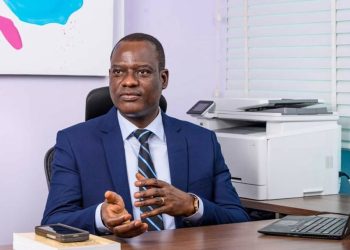
The pledge was made on Thursday in Abuja by the Chairman of the Revenue Mobilisation Allocation and Fiscal Commission, Mohammed Shehu, during the 2025 budget performance appraisal and 2026 budget defence organised by the House of Representatives Committee on Finance.
Shehu expressed concern over what he described as persistent encroachment by state governments on local government finances, noting that the situation has weakened governance and service delivery at the local level. He said the commission was prepared to reintroduce monitoring mechanisms to ensure that allocations reach local councils directly.
“The commission would like to establish a Local Government Committee now, like we used to do before the Supreme Court said we were busy bodies. Now, we will monitor every single Local Government in Nigeria,” Shehu said.
He added that President Bola Tinubu had personally engaged state governors on the issue, warning of possible executive action if local government autonomy is not respected.
“I’m glad that Mr President spoke to the governors himself, that ‘if you don’t allow this (local government autonomy), I will issue an Executive Order.’ The commission is fully in support of Mr President over this course,” he stated.
According to Shehu, the decline in the effectiveness of local governments has contributed significantly to Nigeria’s development challenges. “The crisis we are having in Nigeria today is the lack of functionality of local governments, and every single one of us knows this. Even under the military, the local governments were performing much better,” he said.
The RMAFC chairman also commended the House Committee on Finance, led by Abiodun Faleke, for its support, which he said has strengthened the commission’s engagement with revenue-generating agencies.
“I sincerely thank this committee for what you have done for RMAFC. We are now being respected by almost all the revenue-generating agencies in Nigeria,” Shehu noted, citing improved collaboration with institutions such as the Nigerian Customs Service and the Nigerian Upstream Petroleum Regulatory Commission.
Shehu further disclosed that the commission had completed an audit of oil assets in the Niger Delta and was nearing the conclusion of a new revenue allocation formula for the three tiers of government. He also confirmed that work on the remuneration of political office holders had been finalised and forwarded to the President.
In his remarks, Faleke praised RMAFC’s leadership, describing the commission’s efforts as vital to strengthening national revenue generation.
Interference in local government finances has long been a contentious issue, largely due to the State–Local Government Joint Account system, which critics argue allows governors to divert council funds. With renewed federal pressure and recent court decisions, the debate over local government autonomy has returned to the centre of national policy discussions.