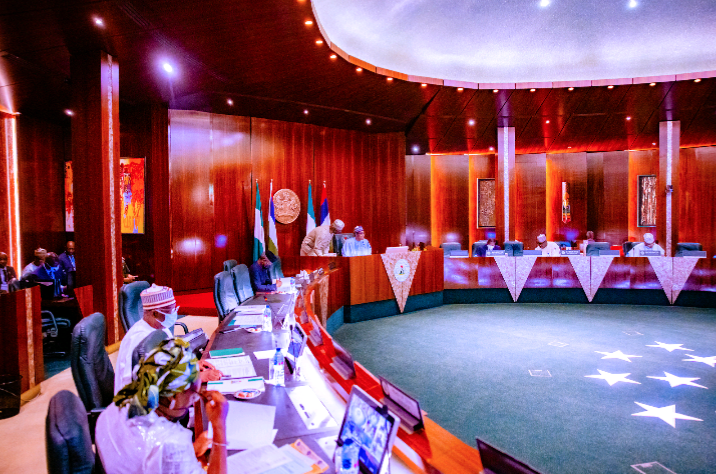

The Federal Executive Council (FEC) has officially approved the 2026–2028 Medium-Term Expenditure Framework (MTEF), setting clear fiscal guidelines and revenue expectations for the coming three years.
According to the Minister of Budget and National Planning, Atiku Bagudu, the total Federal Government revenue from all sources is projected to reach ₦34.33 trillion in 2026, inclusive of ₦4.98 trillion expected from government-owned enterprises.
Budget assumptions underpinning these figures include a conservative benchmark oil production of 1.8 million barrels per day (despite a 2.06 million bpd target), an oil price pegged at $64.85 per barrel, and an exchange rate forecast of ₦1,512 to the US dollar, reflecting anticipated fiscal pressures in a pre-election year.
Bagudu noted that the projected revenue represents a decline of ₦6.55 trillion, about 16% lower than the 2025 budget estimate.
On the expenditure side, statutory transfers to states and local governments are estimated at roughly ₦3 trillion. Debt servicing is projected at ₦10.91 trillion, while recurrent non-debt expenses (like personnel costs and overheads) will total ₦15.27 trillion.
Given these revenue and spending plans, the 2026 fiscal year is expected to run a deficit of about ₦20.1 trillion, which amounts to roughly 3.61% of GDP.
The MTEF also presents macroeconomic projections: nominal GDP is forecast to hit over ₦690 trillion in 2026 and grow to approximately ₦890.6 trillion by 2028. The non-oil sector is expected to expand significantly, while overall GDP growth for 2026 is pegged at around 4.6%.
Beyond numbers, FEC also approved funding initiatives: a $100 million package from the African Development Bank to support the Nigeria Youth Investment Fund aimed at empowering entrepreneurs aged 18 to 35, especially those in small and medium-sized enterprises. Additionally, financing from the Islamic Development Bank was approved for an integrated agricultural development project in Yobe State, aiming to boost food production and rural livelihoods.
Cabinet ministers deliberated on these plans before endorsing the overall fiscal strategy. The framework, including the Medium-Term Fiscal Expenditure Ceiling (MFTEC), was developed through collaboration among the Budget Office, relevant ministries, private sector stakeholders, civil society, and development partners to reflect national priorities.
The government believes that if macroeconomic stability is maintained, reforms are sustained, and the MTEF is implemented faithfully, Nigeria could chart a stronger growth path over the next three years.
“From this projection, the federal government is expected to receive N22.6 trillion, states N16.3 trillion, and local governments N11.85 trillion.”
In summary, the approved MTEF offers a structured fiscal path, balancing cautious optimism with stark economic realities. While the revenue forecast underscores efforts to deepen non-oil revenue and expand the economic base, the sizeable projected deficit highlights the challenges ahead.
With global oil price volatility and currency risks, the emphasis on non-oil revenue and conservative oil benchmarks under the MTEF could help Nigeria reduce fiscal vulnerability but success depends heavily on boosting tax efficiency and broadening economic activities beyond petroleum.