

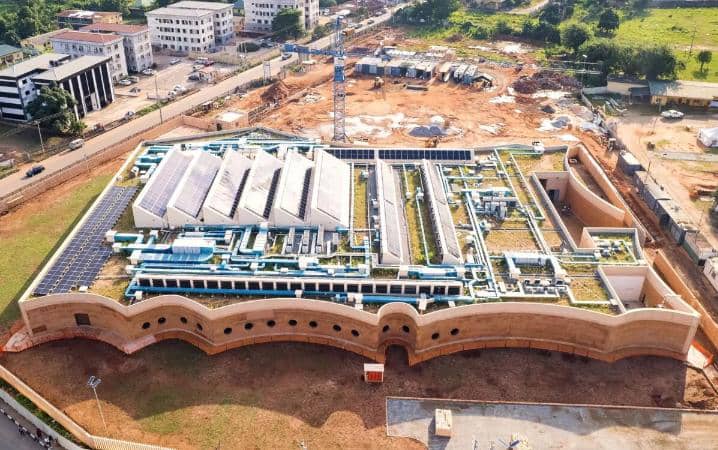
A preview event for the Museum of West African Art (MOWAA) in Benin City, Edo State, was abruptly halted by protesters on Sunday as the much-anticipated facility prepared for its grand opening on Tuesday. Videos circulating on social media showed demonstrators storming the site and ordering foreign guests to leave, reflecting escalating tensions over local control of the museum.
The museum, which cost roughly $25 million, was engineered as a flagship cultural institution to display regional heritage and to include exhibition spaces, restoration labs and archival facilities. However, observers say the dispute centres on the absence of the iconic Benin Bronzes; artefacts befitting the legacy of the ancient Benin Kingdom but still embroiled in restoration and ownership controversies.
According to eyewitnesses, protesters accused organisers of excluding main local stakeholders, including the Benin Royal Palace, from participation in the project. The demonstrators allegedly destroyed property and occupied the museum grounds until law-enforcement personnel intervened. In response, MOWAA released a statement confirming the protest and noting that all guests were “safely escorted to secure locations” amid the disruption.The institution also stressed that it is “an independent, non-profit organisation, of which the former governor has no interest, financial or otherwise.”
The facility was originally conceived as the Edo Museum of West African Art before rebranding to reflect a broader regional focus. Executive Director Phillip Ihenacho told the media the change aligned with the ambition of serving not just Edo State but West Africa and the wider world. The cancellation of preview events through November 11 followed the unrest, with visitors advised to avoid the campus until the situation stabilises.
Beyond the cultural and legacy concerns, the museum is positioned as a major boost for tourism, heritage conservation and creative-economy initiatives in Nigeria. Studies indicate museums contribute to cultural tourism and local economic growth, provided the surrounding infrastructure and stakeholder inclusion are well-managed.
The $25 million investment underscores Nigeria’s pivot toward culture-led economic growth, with its creative and tourism sectors projected to generate US$100 billion by 2030. If the museum draws international visitors as planned, it could support jobs, spark local service-industries and reinforce Edo State’s share of the global museum tourism market estimated to reach US$35 billion by 2032.