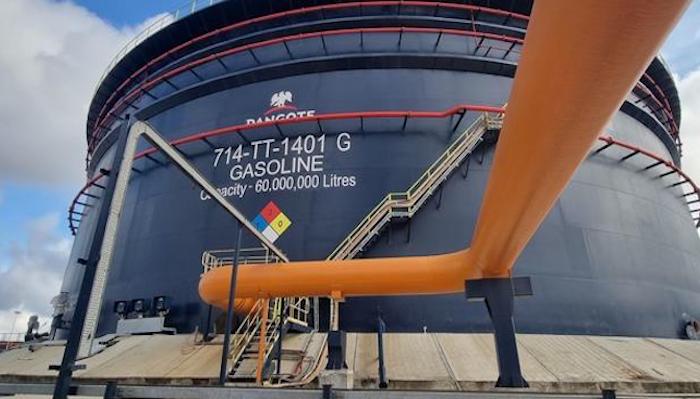

Nigeria’s Dangote Refinery has officially entered the U.S. market, marking a major milestone.
According to shipping data, the first U.S.-bound cargo, a shipment of around 320,000 barrels, was delivered by the tanker Gemini Pearl to a terminal in New York Harbor. The fuel was sourced by Vitol from another trader and sold to Sunoco.
Two more shipments are on the way to New York, with one sold by Glencore to Shell and another by Vitol.
These deliveries signal that the new $20 billion refinery can produce fuel that meets the strict quality standards required by the U.S. market, a significant achievement after earlier startup challenges.
Analysts believe the refinery’s exports will change trade patterns in the region. The plant is expected to reduce Nigeria’s need to import fuel while creating a new outlet for surplus supplies.
However, the future of these exports might be limited in the short term. An industry report from IIR Energy warned that the refinery’s gasoline production unit might need to shut down for two to three months for repairs.
While the Dangote Refinery makes its mark, the global energy landscape is also a topic of discussion. The International Energy Agency (IEA) has stated that global producers need to invest at least $540 billion annually to maintain oil and gas output.
In response to this global context, Bayo Ojulari, the CEO of the Nigerian National Petroleum Company Limited (NNPC), has urged African nations to work together and take control of their energy resources.
He highlighted projects like the Nigeria-Morocco gas pipeline as key examples of how Africa can strengthen its energy security and regional integration.
The successful entry of the Dangote Refinery into international markets positions Nigeria as a key player in both global energy trade and the push for Africa’s energy independence.