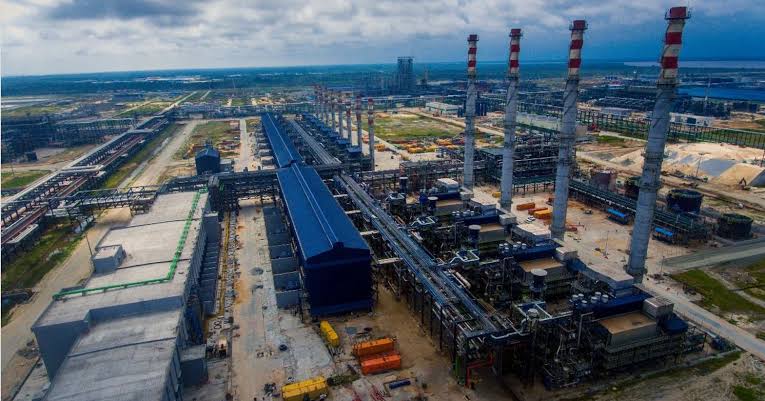

Nigeria’s energy sector is witnessing a pivotal moment as the Dangote Refinery moves to stabilize operations following a dispute that led to the recall of engineers, while the Nigerian National Petroleum Company (NNPC) finalizes a long delayed gas infrastructure project critical to domestic supply.
The twin developments underscore both the operational challenges and structural progress shaping Africa’s largest oil producer as it seeks to reduce import dependence and strengthen its energy value chain.
The Dangote Refinery, a $20bn industrial complex positioned as a cornerstone of Nigeria’s refining ambitions, has recalled engineers after an internal dispute disrupted technical operations. While details of the disagreement remain limited, industry sources suggest it involved contractual and operational coordination issues, common in large-scale, multi-contractor industrial projects.
The recall signals an effort to quickly normalize operations at a facility widely expected to transform Nigeria’s downstream sector. Once fully operational, the refinery is projected to process up to 650,000 barrels per day, potentially eliminating the country’s longstanding reliance on imported refined petroleum products.
Analysts say any disruption, even temporary, raises concerns about commissioning timelines and output ramp up. “Early stage operational frictions are not unusual in mega refinery projects,” said a Lagos based energy consultant. “The key issue is how quickly management can resolve them without affecting production targets.”
The refinery’s performance is closely watched by investors, policymakers, and fuel marketers, given its potential to influence domestic fuel pricing, foreign exchange demand, and regional exports.
In parallel, NNPC announced the completion of the Obiafu-Obrikom-Oben (OB3) gas pipeline, including the technically challenging crossing beneath the River Niger. The OB3 pipeline is designed to transport up to 2 billion standard cubic feet of gas per day, linking eastern gas fields to western demand centers.
The project has faced years of delays due to technical complexities, funding constraints, and security concerns. Its completion marks a significant milestone in Nigeria’s efforts to expand gas utilization, reduce flaring, and support power generation.
Gas is increasingly viewed as a transition fuel for Nigeria, offering a cleaner and more reliable alternative to diesel and fuel oil in electricity generation and industrial use. The OB3 pipeline is expected to improve supply to power plants, potentially easing chronic electricity shortages.“
This is a major breakthrough for domestic gas distribution,” said an Abuja based energy policy analyst. “It enhances supply security and could help stabilize power output, which has been a persistent constraint on economic growth.”
Together, the Dangote Refinery’s operational reset and the OB3 pipeline completion highlight a broader shift in Nigeria’s energy landscape from import dependence toward self sufficiency and infrastructure-led growth.
If successfully executed, these developments could significantly reduce Nigeria’s fuel import bill, ease pressure on the naira by lowering foreign exchange demand, and improve industrial productivity through more reliable energy supply.
However, risks remain. The refinery must navigate complex logistics, crude supply agreements, and pricing frameworks, while the gas sector must address distribution bottlenecks and regulatory uncertainties to fully capitalize on new infrastructure.
The coming months will be critical. Investors will look for sustained operational progress at the Dangote Refinery and measurable improvements in gas supply following the OB3 pipeline’s commissioning.
For policymakers, the focus will be on translating these infrastructure gains into tangible economic benefits, lower energy costs, improved power supply, and enhanced industrial output.
Nigeria’s energy sector has long been defined by missed potential. With these latest developments, it may finally be edging closer to delivering on its promise.