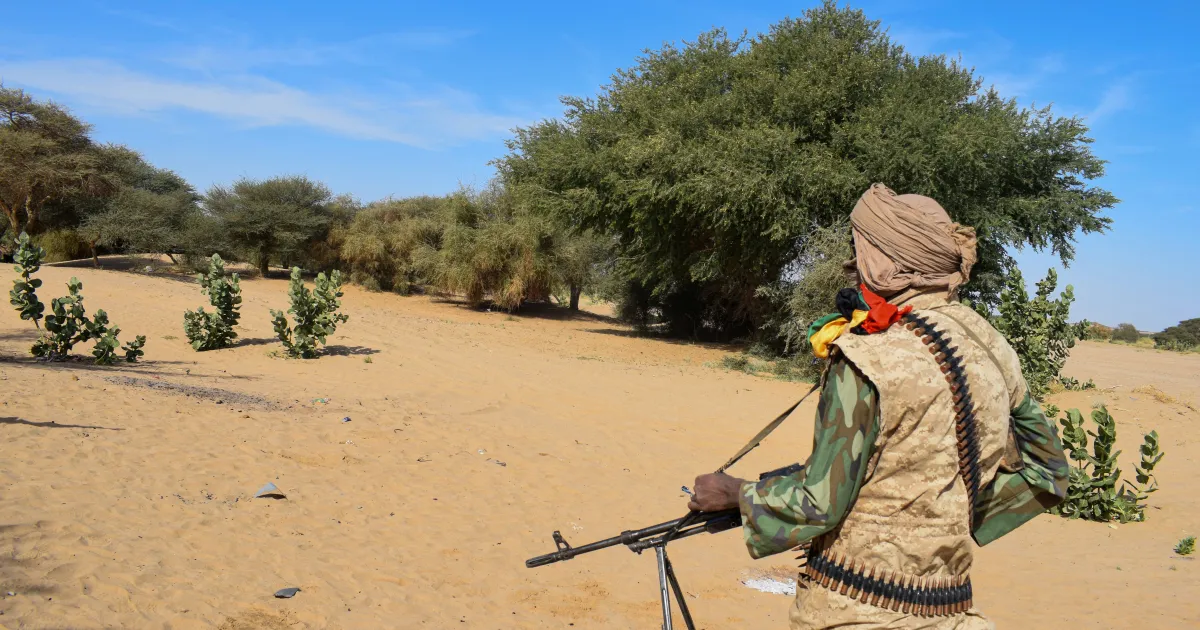

Mali has been shaken by a wave of coordinated attacks that exposed worsening insecurity and a shifting alliance among insurgent groups. Fighters linked to Jama’at Nusrat al‑Islam wal‑Muslimin (JNIM) and Tuareg separatists launched simultaneous strikes across the country, including in the capital Bamako, killing Defence Minister Sadio Camara. The offensive targeted key military sites and the airport, while insurgents also seized ground in northern regions including Kidal.
Analysts say the scale and coordination mark a major escalation, highlighting the militants’ growing reach and ability to operate deep inside government‑controlled areas. The attacks also forced Russian‑backed paramilitary forces to withdraw from parts of the north, raising fresh questions about the effectiveness of external military support to Mali’s junta led by Assimi Goita. Experts warn that the emerging alliance between jihadist and separatist groups could further destabilise the Sahel, as insecurity spreads across neighbouring countries.
From a regional economic perspective, the deteriorating security situation threatens investment and trade. Mali is a significant gold producer and a transit hub for goods moving between West and North Africa. Renewed insurgent control over northern towns disrupts supply chains, raises transport insurance costs and deters mining companies from expanding operations. Neighbouring Burkina Faso and Niger, already grappling with their own insurgencies, face additional pressure from cross‑border militant movements.
The killing of a senior cabinet minister in Bamako is particularly troubling. It demonstrates that militants can strike at the heart of the state, undermining confidence in the junta’s ability to protect both officials and civilians. For foreign investors, such incidents reinforce perceptions of the Sahel as a high‑risk environment, potentially diverting capital to more stable regions. Humanitarian access is also compromised, with millions of displaced people already dependent on aid.
The international community faces difficult choices. Sanctions and diplomatic pressure have had limited effect on the junta, while Russian engagement has brought tactical gains but not strategic stability. The emerging insurgent alliance suggests that military solutions alone are insufficient. Regional organisations, including the Economic Community of West African States and the African Union, may need to revive dialogue efforts while supporting border security cooperation.