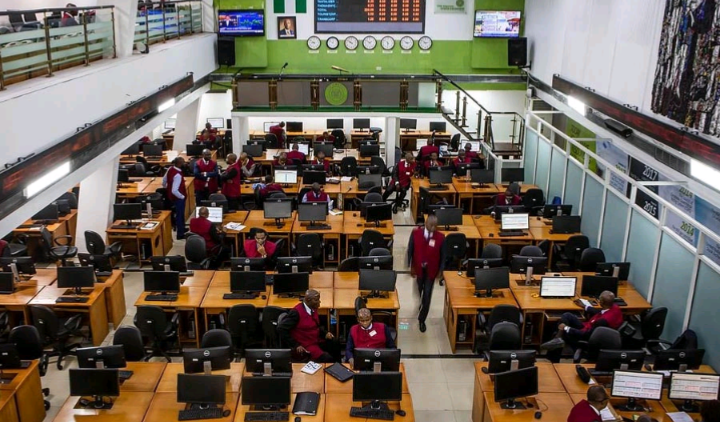

The Nigerian stock market staged a powerful rally on Thursday, February 19, 2026, with investors gaining approximately N1.7 trillion. This surge, which pushed the total market capitalization to a historic N123.93 trillion, was fueled by aggressive buying in the banking, industrial, and consumer goods sectors. The benchmark All-Share Index (ASI) advanced by 1.39%, closing at 193,073.57 points, as the market effectively reclaimed territory lost during earlier sessions of profit-taking.
The economic and market consequence of this rally is a reinforced “bullish” outlook for the Nigerian Exchange (NGX) as it continues to deliver some of the best dollar returns globally in 2026. The N1.7 trillion gain reflects deep market liquidity and renewed confidence in corporate earnings, especially following the recent strengthening of the naira. From a fiscal perspective, the sustained rise in market value provides a critical buffer for local pension funds and institutional investors, who have significantly increased their exposure to high-cap equities this year.
Analytically, the banking sector was the standout performer. The NGX Banking Index rose to 1,852.15, led by a 9.52% jump in Stanbic IBTC and a 6.67% gain for FBN Holdings (FirstHoldCo). Other tier-1 banks like AccessCorp (+4.00%) and UBA (+2.13%) also saw heavy demand, despite minor declines in smaller counters like Fidelity and Wema. This “sector rotation” suggests that investors are pricing in higher interest margins and robust full-year 2025 results from the financial heavyweights.
The impact on “Industrial and Consumer Goods” was equally pronounced. The NGX Industrial Index was supported by gains in Julius Berger (+2.77%) and Lafarge Africa (+2.11%), while the Consumer Goods Index benefited from a 9.38% surge in Guinness Nigeria and a 6.21% rise in NASCON. These gains indicate that investors are moving into “defensive” stocks that provide both dividend yield and protection against inflation. However, the Oil & Gas sector saw mild profit-taking, showing that the rally was selective rather than a blind market-wide sweep.
Furthermore, the surge in trading activity with GTCO recording the day’s highest value at N6.20 billion underscores the return of big-ticket institutional players. The market breadth closed firmly positive with 52 gainers against 26 losers. While penny stocks like DEAPCAP and FTG Insurance hit their 10% daily limits, large-cap stability remained the primary driver of the N1.7 trillion wealth creation. This performance places the year-to-date return for the Nigerian market at a staggering 24.09%.
The long-term economic outlook for the Nigerian bourse remains optimistic, especially with the anticipated listing of the Dangote Refinery later this year, which could push market capitalization beyond the $100 billion mark. As the naira maintains its position as one of the world’s best-performing currencies in 2026, foreign participation is hitting a near two-decade high. For now, the NGX is successfully “repairing” the value lost in previous years, positioning Lagos as Africa’s premier investment destination.