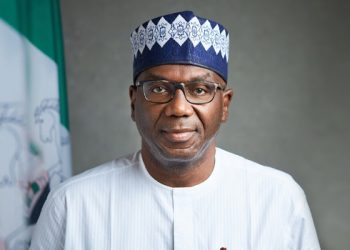
A former National Commissioner of the Independent National Electoral Commission (INEC) has challenged the mounting public calls for the real-time electronic transmission of election results, describing the demand as technically premature and legally misunderstood. Speaking on the complexities of Nigeria’s electoral architecture, the former official argued that while technology is essential, an over-reliance on instantaneous transmission without a robust verification buffer could compromise the integrity of the democratic process. For the Nigerian economy, the debate over electoral transparency is a critical “sovereign risk” factor; institutional stability is a primary prerequisite for attracting long-term Foreign Direct Investment (FDI) and maintaining national credit ratings.
The economic consequence of electoral disputes often fueled by misunderstandings of result transmission is measured in market volatility and capital flight. In the lead-up to and aftermath of major elections, the Nigerian Exchange (NGX) frequently experiences “wait-and-see” periods where institutional investors pause deployments due to perceived political instability. The former commissioner’s intervention suggests that a “rushed” digital transition, if it leads to system failures or contested outcomes, could be more economically damaging than a deliberate, hybrid approach. Maintaining a stable and predictable political transition is essential to ensuring that Nigeria’s GDP growth remains on a positive trajectory.
Analytically, the critique focuses on the disconnect between the IReV (INEC Result Viewing Portal) and the statutory collation process defined in the Electoral Act 2022. The ex-commissioner noted that the law recognizes the manual primary record (Form EC8A) as the ultimate legal authority, with electronic images serving as a secondary transparency tool rather than a replacement for physical collation. From a technological perspective, the official highlighted Nigeria’s “digital divide,” noting that significant portions of the country still lack the 4G/5G infrastructure required for seamless, real-time data uploads from all 176,846 polling units.
The impact on “Democratic Trust” is a vital dimension of this discourse. The former official warned that promising “real-time” results that the commission cannot technically guarantee creates a “perceptual gap” that leads to public disillusionment and post-election litigation. For the Nigerian business environment, protracted legal battles over election results create policy paralysis and stall government spending on capital projects. A realistic roadmap for electoral technology one that balances transparency with technical feasibility is necessary to lower the “political risk premium” that often deters international business partners.
Furthermore, the official emphasized the need for a “sovereign technology” approach, where Nigeria develops internal capacities to manage its electoral data without over-reliance on foreign vendors. This is not only a matter of national security but also an opportunity for the Nigerian ICT sector to innovate. By perfecting a hybrid system that ensures the security of the ballot while gradually increasing digital integration, INEC can build a more resilient electoral system. This institutional maturity is what global rating agencies like Moody’s and Fitch monitor when assessing Nigeria’s “Institutional Strength” and “Governance Indicators.”
The long-term economic outlook for the Nigerian federation hinges on the ability of its institutions to manage transitions without triggering social or fiscal crises. As the debate over the 2027 electoral framework intensifies, the former commissioner’s caution serves as a reminder that “transparency” must be backed by “technical reliability.” For Nigeria to move toward a trillion-dollar economy, it must secure its democratic foundation. A stable, undisputed electoral process is the ultimate “infrastructure” that enables trade, encourages entrepreneurship, and ensures that the nation remains a leader in the global emerging markets landscape.