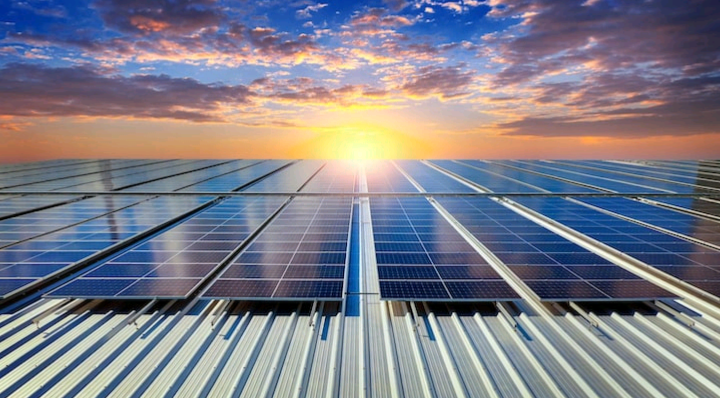

The World Bank has approved a $50 million investment to expand solar-powered agricultural solutions in Nigeria and five other African countries. This funding aims to help farmers adopt clean energy technologies that improve productivity, reduce losses after harvest, and promote sustainable farming across rural and off-grid communities.
Under this initiative, farmers and small agribusinesses in Kenya, Nigeria, Ethiopia, Sierra Leone, Uganda, and the Democratic Republic of Congo will gain access to solar-driven equipment, from cold storage units to water pumps and grain mills. The financing will be directed through the Productive Use Financing Facility (PUFF), a programme designed to support renewable solutions in areas where traditional electrical infrastructure is limited or unreliable.
The programme’s focus is on deploying solar-powered cold rooms, refrigerators, water pumps and grain mills, equipment that helps farmers preserve produce for longer, access better markets, and expand their harvest seasons without being limited by high fuel costs or power outages.
The World Bank’s backing comes with collaboration from other development partners. For example, the Rockefeller Foundation has already put in $12 million, and officials have signalled that more funding could join the effort as country-level implementation picks up speed.
“There is always the ability to scale that up,” said the President of the Rockefeller Foundation during a visit to a solar cold storage facility in Nairobi.
“There’ll be more resources country by country as well,” he added, underlining the programme’s potential to widen its reach over time.
The World Bank is channeling the financing through Mission 300, its flagship programme with the African Development Bank (AfDB) that seeks to bring electricity access to 300 million people in sub-Saharan Africa by 2030.
Across the region, more than 600 million people still live without reliable power, a gap that limits productivity and economic output for farmers and small businesses. Many rural communities rely on expensive fossil fuels or lack access to energy entirely, costing them both time and income.
In countries like Nigeria, agriculture remains a central economic activity, employing a large portion of the workforce. Yet inefficiencies in storage, processing, and transportation frequently lead to post-harvest losses and lower earnings for farmers. The solar expansion programme is meant to address these challenges by enabling off-grid clean energy solutions.
Using solar technology in agriculture can have multiple economic benefits. Solar-powered irrigation and storage reduce farmers’ dependence on costly diesel fuel, lowering production costs while protecting against fuel price volatility. Solar pumps and cold rooms also help agricultural value chains retain more produce, improving food security and price stability.
The World Bank’s move reflects a broader trend toward renewable energy in countries like Nigeria, where solar power adoption is growing. For instance, Nigeria has seen an increase in solar capacity through both private and public investments, and imports of solar panels have reached significant levels as demand rises.
However, Nigeria’s energy transition is still unfolding. Despite progress, millions lack dependable electricity, and policymakers are pressing for stronger regulatory frameworks and investment incentives to attract finance into the sector.
For smallholder farmers, solar tools can be transformative. Studies show that access to renewable mini-grids and off-grid solar solutions has boosted household productivity and incomes in rural parts of Africa, improved health outcomes, and created new economic opportunities.
In implementing this $50 million boost, the World Bank and its partners are betting that clean energy will not only power farms, but also help farming communities become more resilient and economically vibrant. This initiative highlights how renewable solutions are increasingly seen as a cornerstone of Africa’s agricultural and economic development.