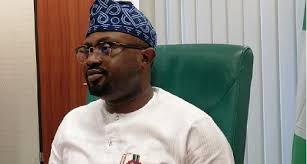

Nigeria’s Interior Minister, Olubunmi Tunji-Ojo, has delivered a stinging rebuke to immigration officials over prolonged passport delays and the persistence of unauthorised charges, emphasising that citizens should not be expected to pay more than the official fees for travel documents. The minister’s comments came as he carried out an unannounced inspection of the Nigerian Immigration Service (NIS) passport office in Gwagwalada, Abuja, underscoring growing concerns about service delivery and accountability in the agency responsible for issuing passports.
During the surprise visit, Tunji-Ojo questioned the slow pace of service and voiced frustration at what he described as an unacceptable experience for applicants. He toured both general service areas and the dedicated VIP and children’s sections, engaging directly with officers and citizens waiting to have their passport applications processed. What he observed, he said, was a failure to meet basic standards of efficiency, with only a handful of people attended to several hours after the office had opened.
“So it means that by 9:30am, I expect to see at least one or two applicants here,” the minister remarked, surveying a room where many applicants remained unserved despite being present since early in the day. He was particularly critical of practices that left people sitting for hours without attention, saying that such delays were wholly unjustifiable when basic processes like enrolment and biometric capturing should take only a few minutes per applicant.
Tunji-Ojo’s frustration was not limited to delays. He took the opportunity to warn officials against imposing any charges beyond those officially approved. He reminded staff that Nigerians had already paid fully for their passport services, whether through online payments or other legitimate channels, and he stressed that it was the duty of immigration officers to honour those terms. “Nigerians have paid for their passports completely. Serve them diligently,” he told the assembled officials, cautioning that there should be no “diesel” or “paper” surcharges passed on to applicants.
The minister also challenged operational inefficiencies, including the way in which enrolment and capturing were sequenced. He criticised a system that required all applicants to be enrolled before any capturing could begin, describing it as insensitive to the needs of those who often have other commitments, such as work or family responsibilities. “Time is money, time is expensive,” he said, lamenting that citizens were forced to waste precious hours due to poor planning and execution within the passport office.
Officials at the Gwagwalada office explained that delays in starting the day’s activities were partly due to power supply issues, noting that operations scheduled to begin at 8:00am only commenced after the generator was switched on around 9:00am. While infrastructure challenges such as intermittent electricity are common across many public institutions, Tunji-Ojo made it clear that such explanations were insufficient in justifying the sub-standard service being provided to passport applicants.
As part of his broader message, the minister emphasised that no category of applicant should be treated as more important than another, asserting that Nigeria has “no VIP” when it comes to public service. He encouraged officers to utilise available resources including under-used sections such as areas designated for VIPs and children to ease congestion and improve turnaround times. Such measures, he argued, would demonstrate a commitment to fairness and a genuine effort to improve the overall experience for the travelling public.
Tunji-Ojo’s intervention comes against a backdrop of ongoing reforms and public concern about passport services, including previous complaints about extended wait times and alleged unofficial payments linked to faster processing. His remarks signal a renewed focus on tackling these issues and reinforcing accountability within the immigration service.