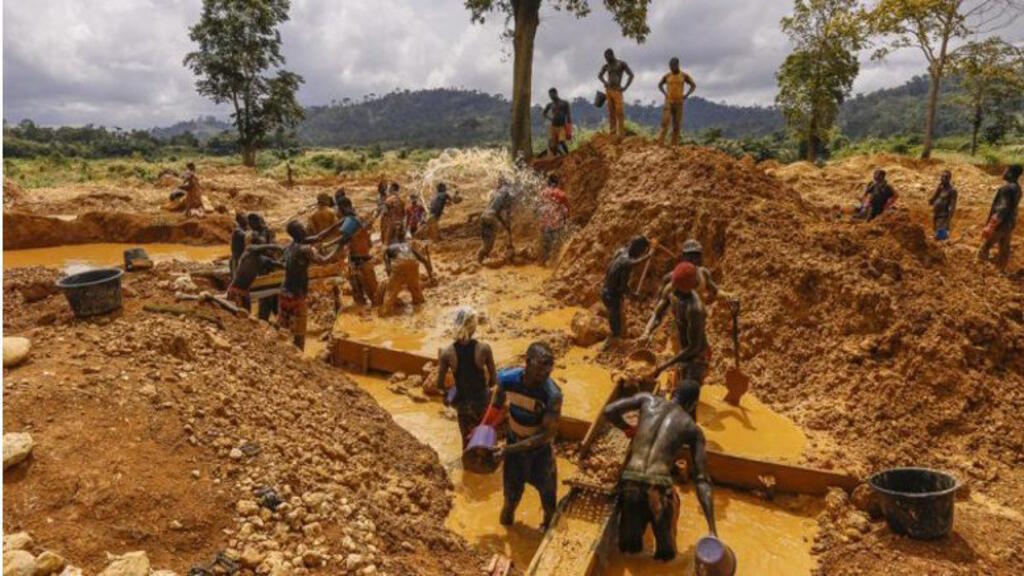

Ghana has announced a blanket ban on all mining activities in its forest reserves as part of a sweeping environmental initiative aimed at protecting water bodies, curbing deforestation, and addressing the rapid expansion of poorly regulated small-scale mining, the Ministry of Environment confirmed. The decision effectively reverses the 2022 regulations that had allowed controlled mining within designated forest areas and will take effect following a mandatory 21-day constitutional period.
Illegal mining, commonly referred to as “galamsey,” has become pervasive, now affecting 13 of Ghana’s 16 regions. Its impact has been extensive, including widespread destruction of cocoa farms, pollution of rivers, and environmental degradation that threatens the sustainability of key ecosystems. The ban is expected to reduce the pressure on these sensitive areas, ensuring the protection of biodiversity and the long-term viability of farmland that underpins one of Ghana’s most important export sectors. Acting Environment Minister Emmanuel Armah-Kofi Buah stated that the measure strengthens the government’s ability to safeguard forests and agricultural lands, highlighting the importance of forests as natural water catchments and critical carbon sinks.
Major mining companies, including Gold Fields, AngloGold Ashanti, Newmont, and Asante Gold, have been significantly affected by illegal mining operations, with increased spending on security and surveillance to protect mining assets and employees. By enforcing the ban, the government seeks to create a more predictable and sustainable environment for legitimate mining operations, potentially reducing the operational risks and costs borne by these multinationals. The move may also incentivise companies to invest in more sustainable mining practices and community development initiatives, aligning private-sector activity with national environmental goals.
Environmental advocates have welcomed the ban as a landmark policy shift. Daryl Mensah-Bonsu, a prominent environmental campaigner, described the decision as a crucial step in halting the degradation of forests and water resources. However, he cautioned that further measures will be required to prevent encroachment, rehabilitate degraded land, and rebuild forest ecosystems for future generations. Reforestation programmes, enforcement of land-use regulations, and community engagement will be essential components of ensuring the long-term success of this policy.
The economic implications of the ban are significant and multifaceted. Small-scale miners, many of whom rely on forest reserves for subsistence livelihoods, may face short-term income losses, highlighting the need for alternative employment or formalised small-scale mining frameworks. In contrast, the cocoa industry and other agricultural sectors stand to benefit from reduced land degradation, which can improve crop yields and export revenues. Protecting water sources and soils also reduces the long-term costs associated with environmental restoration and supports sustainable rural development.
For Ghana’s formal mining sector, the ban provides both challenges and opportunities. Companies may experience temporary disruptions where mining overlaps with previously permitted forest areas, but the enforcement of stricter environmental standards can ultimately create a more secure investment climate. By reducing illegal operations that undermine legitimate mining, the ban may help stabilise commodity production and support Ghana’s reputation as a responsible gold-producing nation in the global market. Additionally, the policy aligns with international environmental expectations, potentially attracting green financing and ESG-linked investments in both mining and agricultural sectors.
The government’s move reflects a broader recognition of the interconnection between environmental stewardship, agricultural sustainability, and long-term economic growth. Ghana relies heavily on both gold and cocoa exports, which contribute substantially to foreign exchange earnings. Maintaining forest reserves and protecting water systems is therefore not merely an ecological concern but also a strategic economic priority. A failure to address deforestation and land degradation could have lasting consequences for food security, rural incomes, and export competitiveness.
Conclusively, Ghana’s comprehensive ban on mining in forest reserves represents a decisive step towards environmental preservation and sustainable economic planning. While the measure poses immediate challenges for small-scale miners and requires robust enforcement mechanisms, it strengthens the prospects for protecting vital ecosystems, safeguarding agricultural productivity, and creating a more stable environment for formal mining operations. The policy underscores the government’s commitment to balancing economic development with environmental responsibility and sets a precedent for other countries grappling with the complex trade-offs between natural resource exploitation and long-term sustainability.