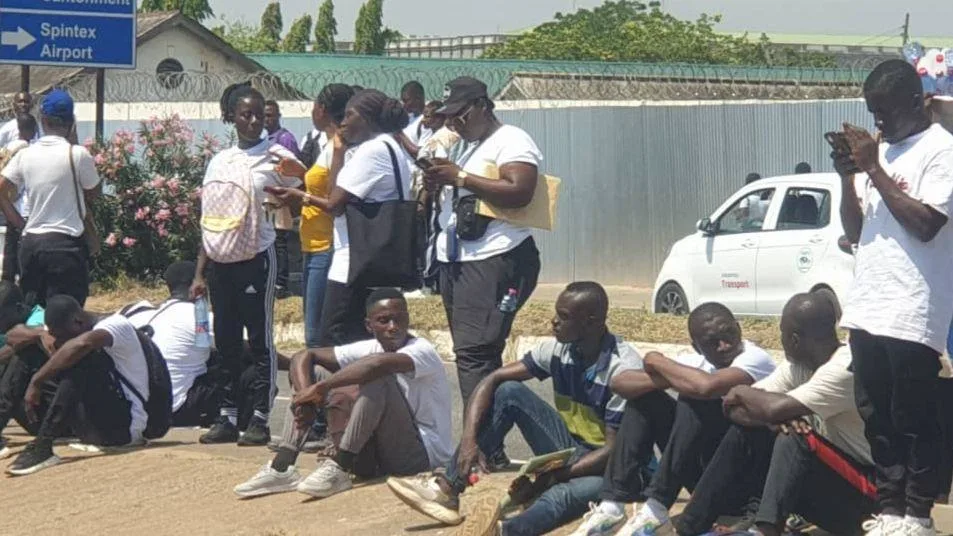

At least six people lost their lives in a tragic crowd crush during a military recruitment exercise at the El-Wak Sports Stadium in Accra, Ghana, on Wednesday. The stampede, which occurred in the early hours before the exercise officially commenced, was triggered when thousands of eager applicants surged through the stadium gates, overwhelming security officers on duty.
Authorities said the exercise had drawn an unexpectedly large turnout following the extension of the registration deadline, granted to accommodate those who faced technical challenges with the online application process. The move, intended to ensure inclusivity, inadvertently contributed to overcrowding as hopeful applicants converged en masse on the venue in search of one of the few available military positions.
High Hopes Turn Tragic
Witnesses described chaotic scenes as young men and women, many arriving before dawn, jostled to enter the stadium in hopes of securing a spot. As barriers gave way, the crowd’s momentum created a deadly crush near the entrance, leaving several injured and at least six dead. Emergency services and military medics quickly moved in to assist, with the injured rushed to the 37 Military Hospital for treatment.
The Ghana Armed Forces, in a statement, expressed deep condolences to the families of the deceased and promised a thorough investigation into the causes of the incident. “We are heartbroken by this tragedy. The recruitment process is designed to offer a fair opportunity, and we will ensure that such an incident never recurs,” the statement read. Security personnel have since cordoned off parts of the stadium and tightened access controls, allowing the recruitment process to continue under stricter supervision.
A Symptom of Deeper Economic Strain
The tragedy has sparked nationwide reflection on the scale of unemployment and the desperation among Ghana’s youth to secure formal employment. With a youth unemployment rate of approximately 13%, according to the Ghana Statistical Service, competition for limited government jobs has reached alarming levels. The military, police, and civil service remain some of the few institutions offering stable pay, benefits, and social prestige, making their recruitment exercises magnets for thousands of applicants.
Experts say the crush at El-Wak Stadium is symptomatic of broader structural issues in Ghana’s labour market. Despite recent macroeconomic stabilisation efforts, the country continues to grapple with high inflation, a weakened currency, and a sluggish private sector struggling to absorb the growing youth population. Many graduates and school leavers face prolonged joblessness, often turning to informal work or migration in search of opportunities.
Economic and Policy Implications
The crowd crush may also carry political and economic implications for the government, which has pledged to create sustainable jobs and restore public confidence in state recruitment processes. Analysts warn that public frustration over unemployment could intensify if structural reforms in industrialisation, skills training, and entrepreneurship are not accelerated.
The event comes at a time when Ghana is implementing economic reforms under an International Monetary Fund (IMF) programme aimed at stabilising public finances and restoring investor confidence. While the government has made progress in fiscal consolidation, many young people feel excluded from the benefits of recovery. The tragedy thus risks eroding public trust in institutions seen as pathways to stability.
Moreover, the incident may raise questions about safety protocols in public recruitment drives and the adequacy of digital systems meant to reduce physical crowding. The extension of the registration deadline, though well-intentioned, exposed weaknesses in the management of large-scale exercises. Calls are growing for greater use of decentralised and digital screening mechanisms to prevent future disasters.
Public Reaction and Next Steps
Social media has been flooded with messages of grief and anger, as citizens demand accountability from both the military and government agencies responsible for public safety. Civil society groups have urged authorities to release a transparent report on the incident and provide compensation to affected families.
In the days following the tragedy, the Ghana Armed Forces have been working to reassure the public that the recruitment process will proceed fairly and safely. Officials say lessons from the incident will inform a broader review of security, logistics, and crowd control planning.
A Stark Reminder
The El-Wak tragedy is a painful reminder of the socio-economic pressures facing Ghana’s youth and the urgent need for comprehensive employment policies that extend beyond the public sector. Without meaningful job creation in industries such as manufacturing, agriculture, and technology, experts warn that similar incidents could recur as the youth population continues to grow.
As Ghana mourns the victims, the nation is left to confront an uncomfortable truth: behind every crowd surge lies a collective yearning for opportunity. Unless the underlying economic realities change, tragedies like the one at El-Wak Stadium may remain grim symbols of the country’s unfinished struggle for inclusive growth.