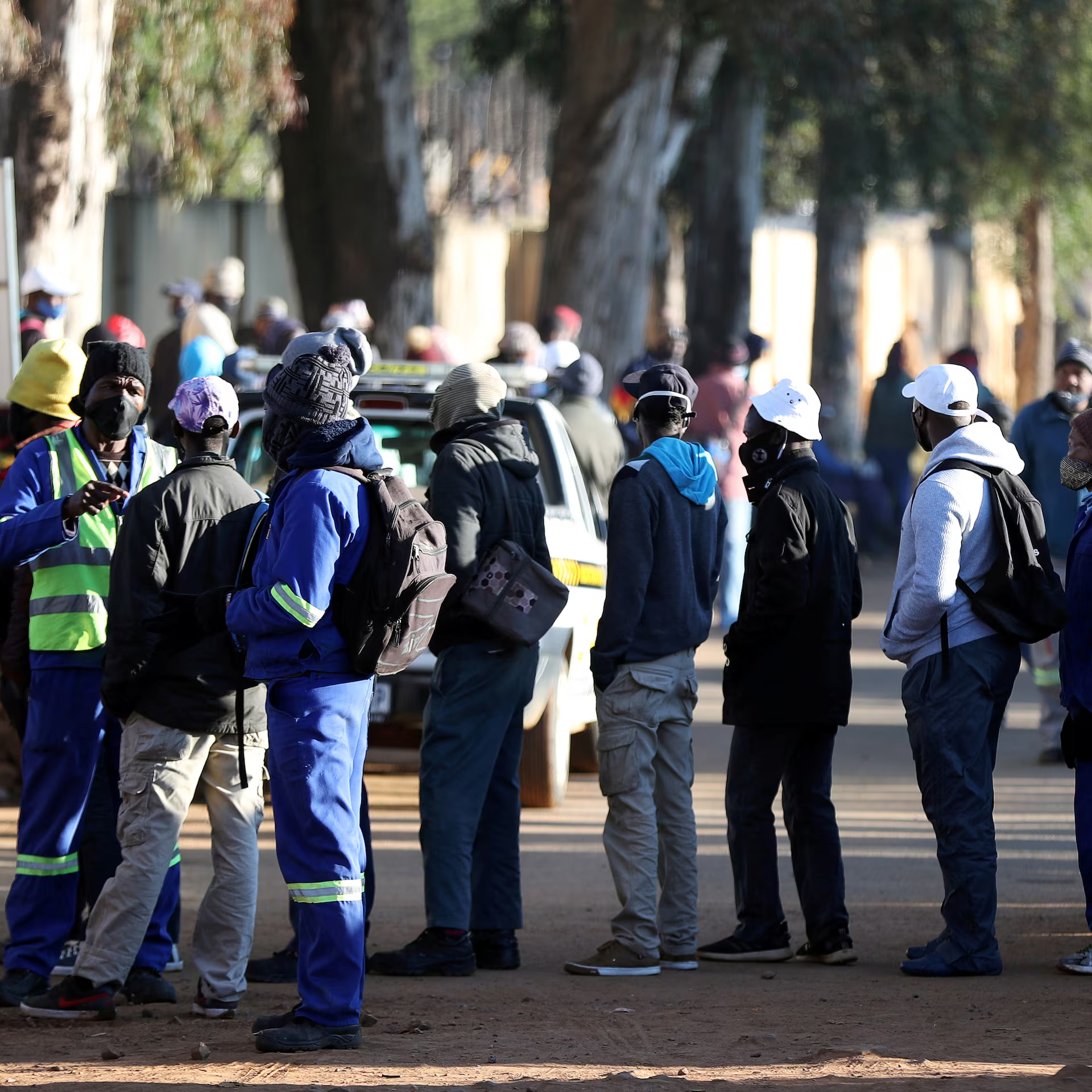

South Africa’s unemployment rate fell slightly to 31.9 per cent in the third quarter of 2025, down from 33.2 per cent in the previous quarter, according to data released by Statistics South Africa (Stats SA) on Tuesday. The modest improvement reflects job creation in several key sectors, including construction, community and social services, and trade, offering tentative signs of recovery in Africa’s most industrialised economy after a prolonged period of sluggish growth.
The quarterly labour force survey showed that construction led employment gains with 130,000 new jobs, followed by community and social services with 116,000, and trade with 108,000. In total, six of the ten industries tracked by Stats SA recorded employment growth, while four sectors experienced declines. The agency attributed part of the improvement to an updated data collection methodology that aligns more closely with International Labour Organisation (ILO) guidelines. This revision has helped capture more informal employment, particularly in the construction sector, where casual labour and small-scale contracting play a significant role.
The job gains come at a time when South Africa is showing tentative signs of stabilisation following years of structural challenges. Improved electricity supply, fewer power cuts, and a gradual easing of logistics bottlenecks at key ports and railways have bolstered business confidence. These improvements have allowed several industries to resume normal operations and rehire workers laid off during previous disruptions.
However, the overall unemployment rate remains among the highest in the world, highlighting the scale of South Africa’s labour market crisis. Even with the recent decline, nearly one in three working-age adults remains jobless, and youth unemployment continues to hover above 45 per cent. The persistence of high unemployment underscores deep-seated structural problems, including limited industrial diversification, low business investment, and skill mismatches between education outcomes and labour market needs.
Economists have described the latest figures as encouraging but cautioned that the improvement is unlikely to be sustained without stronger investment growth. Citi economist Gina Schoeman noted that while output and employment have stabilised, South Africa’s investment rate, currently around 14 per cent of GDP, must rise to at least 16 per cent to generate meaningful and lasting reductions in unemployment. She added that this would require a combination of policy consistency, improved investor confidence, and accelerated reforms in energy, logistics, and labour regulation.
The construction sector’s performance is particularly notable, as it suggests a gradual revival in infrastructure activity after years of underinvestment. Government efforts to fast-track public infrastructure projects and partnerships with private developers appear to be yielding early results. The sector’s reliance on informal and small-scale contractors also means that improved data collection has captured a segment of the labour market that had been underreported in previous surveys.
Meanwhile, the community and social services sector, which includes public administration, health, and education, benefited from increased government hiring and social programme expansions aimed at stabilising employment in the aftermath of economic shocks. The trade sector also recorded gains, driven by improved retail activity and the gradual recovery of consumer confidence following a moderation in inflation and interest rates.
Despite these gains, weak domestic demand remains a significant constraint. Household spending continues to be subdued, reflecting high debt burdens and limited wage growth. Businesses, in turn, remain cautious about expansion, particularly amid global uncertainty and ongoing fiscal pressures on the South African government.
Analysts argue that the country’s path to sustained employment growth will depend on deep structural reforms aimed at improving productivity, supporting small businesses, and modernising industries. Expanding vocational training and aligning education with emerging sectors such as renewable energy, logistics, and digital services could also help reduce the skills gap that has long hindered job creation.
From a macroeconomic perspective, the decline in unemployment offers some relief to policymakers, including the South African Reserve Bank (SARB), which has faced a delicate balance between controlling inflation and supporting growth. With inflation moderating toward the mid-point of the target band and economic conditions stabilising, the labour market data could strengthen the case for a more accommodative monetary stance in 2026.
Still, the underlying message of the latest report is one of cautious optimism. The drop in unemployment reflects progress, but it also highlights how fragile the recovery remains. Sustained job creation will require not only a favourable macroeconomic environment but also coordinated action to improve energy reliability, stimulate private investment, and expand opportunities for young workers entering the labour force.
As South Africa looks ahead, the challenge is to convert these early gains into long-term structural momentum. If investment can rise to the levels economists recommend and reforms continue to take hold, the country may finally begin to reverse years of stagnation and unlock its potential for inclusive and sustainable growth.