
The Central Bank of Nigeria (CBN) has set a new target of attracting $1.5 billion in monthly diaspora remittances by the end of June 2027, an annualized run rate of $18 billion, while announcing plans to introduce interbank repurchase agreement (repo) and overnight indexed swap (OIS) markets in the first quarter of next year.
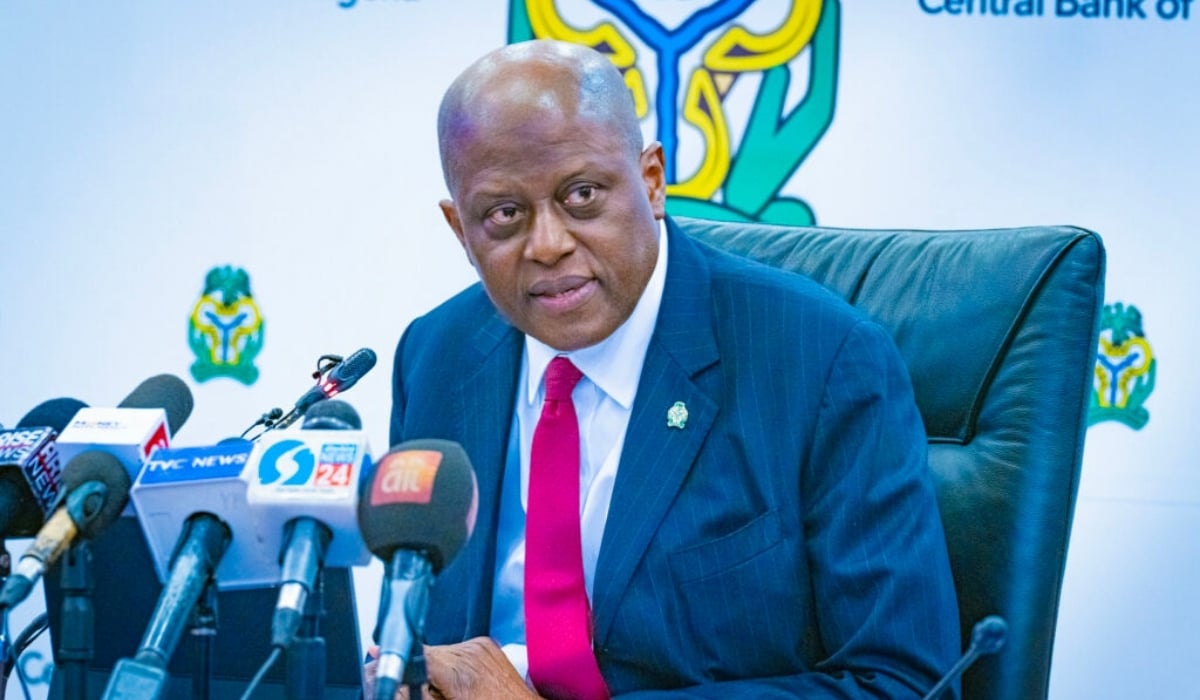
CBN Governor Olayemi Cardoso disclosed the initiatives at the 61st Annual Bankers’ Dinner of the Chartered Institute of Bankers of Nigeria (CIBN) in Lagos on Friday, November 27, 2026.
Cardoso said Nigeria had achieved its previous target of $1 billion in monthly diaspora remittances, announced at the previous year’s bankers’ dinner, and was now targeting a 50% increase to $1.5 billion per month by the end of the first half of 2027. If sustained over 12 months, the inflows would total $18 billion annually.
According to the CBN governor, the progress reflects improvements in formal remittance channels, driven partly by licensed International Money Transfer Operators (IMTOs), which have expanded their operations, invested in technology, and improved transparency, particularly across Asian corridors.
He added that foreign exchange market reforms had strengthened investor confidence, with the naira appreciating by approximately 6% over the preceding year and daily FX market turnover occasionally exceeding $1 billion.
To further deepen Nigeria’s money market, the CBN plans to launch interbank repo and overnight indexed swap markets in the first quarter of 2027.
Under the proposed framework, the interbank repo market will allow financial institutions to borrow and lend short-term funds using securities, such as government bonds, as collateral. This is expected to improve liquidity management and broaden access to short-term funding.
The overnight indexed swap market will give financial institutions instruments to hedge against interest-rate fluctuations by exchanging fixed-rate payments for payments tied to an overnight benchmark.
Cardoso said the CBN would collaborate with market participants to establish both markets, alongside a new comprehensive regulatory rulebook scheduled for January 2027, to give institutions greater capacity to manage liquidity and longer-term financing risks without relying heavily on central bank interventions.
The initiative builds on the Nigeria Overnight Financing Rate (NOFR), a transaction-based money-market benchmark developed by the CBN in collaboration with the Financial Markets Dealers Association (FMDA) and introduced in April 2026. Cardoso reiterated his call for banks to adopt the NOFR in loan pricing to improve transparency and strengthen interest-rate risk management.
The announcements come amid improvements across key macroeconomic indicators. Data from the National Bureau of Statistics (NBS) showed that headline inflation eased to 14.06% in October 2026 from 14.63% in September, continuing a steady downward trend.
Nigeria’s gross external reserves also reached $55.2 billion in October 2026, their highest level in approximately 18 years, according to the Federal Ministry of Finance.
Meanwhile, the banking sector has successfully concluded its recapitalisation exercise, with 33 banks meeting the revised minimum capital requirements after raising a combined ₦4.65 trillion over the 24-month programme that ended in March 2026.
Together, the CBN’s new initiatives aim to modernize financial market infrastructure, sustain foreign exchange inflows, improve systemic liquidity, and reduce the banking sector’s dependence on apex bank support.