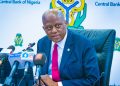

The Federal Government has recalled 57 retired air traffic controllers (ATCOs) to tackle a growing manpower shortage that has threatened the safety and efficiency of flight operations across Nigeria’s airports.
The move, announced by Minister of Aviation and Aerospace Development Festus Keyamo, comes amid mounting concern over staff fatigue and increased workloads among serving controllers, who have been stretched beyond safe operational limits.
Amos Edino, President of the Nigerian Air Traffic Controllers Association (NATCA), confirmed that the recalled officers would be deployed to less busy airports as a stopgap while the government pursues new recruitment and a possible extension of the retirement age.
A sector under strain
For months, air traffic controllers have raised alarm over worsening manpower shortages, warning that the stress of prolonged duty hours poses a real risk to air safety. Controllers, who are expected to work no more than two hours per session, have reportedly been forced to remain on duty for up to five hours at a stretch.
“The shortage of controllers has led to excessive workloads and increased stress levels,” Edino said. “This situation has serious implications for both safety and performance.”
Earlier this year, NATCA had appealed to the government to recruit and train fresh graduates to handle the country’s expanding air traffic volume. Nigeria’s skies now handle more domestic and regional flights than ever before, but investment in personnel development has lagged behind.
Keyamo’s assurances
Keyamo said the recall is a temporary measure to stabilise operations while structural reforms are underway. He also confirmed that plans are being finalised to raise the retirement age for controllers from 60 to 65 years to retain experienced hands longer and facilitate mentorship for younger officers.
“We have recalled 57 retired ATCOs to manage less busy airports and address the shortage of active air traffic controllers,” the minister said through Umar Farouk, Managing Director of the Nigerian Airspace Management Agency (NAMA). “At the same time, we are improving remuneration and training to attract new talent into the system.”
The ministry is reportedly working with relevant aviation authorities to finalise the policy changes, including the upward review of the retirement age and a renewed recruitment drive.
The economic toll on airlines and passengers
The staffing crisis has not only strained the system but also carries economic consequences that ripple through the aviation sector. Airlines have been forced to delay or reschedule flights due to inadequate control tower coverage, increasing operational costs that are often passed on to passengers through higher fares.
In a country where air travel is already a costly option, further increases in ticket prices could push more Nigerians back to road transport, despite growing concerns over highway insecurity. The reliability of air traffic control services also affects insurance premiums, aircraft leasing terms, and investor confidence in the industry.
An airline executive who spoke on condition of anonymity said: “When controllers are overworked, safety margins shrink. Any disruption at the tower delays flights, and every delay costs money. Eventually, the passenger pays for it.”
A temporary fix for a long-term problem
While the recall of retired controllers offers short-term relief, experts say the move underscores a deeper structural weakness, decades of underinvestment in aviation manpower and training infrastructure.
Analysts believe that until Nigeria begins consistent recruitment and invests in simulators, training schools, and technology upgrades, the sector will remain vulnerable to manpower shocks.
For the average traveller, this development could mean fewer flight cancellations in the immediate term, but ticket prices may stay high as airlines adjust to rising operational costs and uncertainties in the system.
As the recalled officers return to their posts, the larger question remains whether the government can use this reprieve to rebuild a sustainable workforce for the future, one that keeps Nigeria’s skies safe and its aviation economy stable.