
The Federal Government has set 2027 as its target to settle the remaining ₦2.07 trillion of its verified ₦3.3 trillion legacy debt to electricity generation companies (GenCos), following bond issuances worth approximately ₦1.23 trillion under its power sector debt reduction programme.
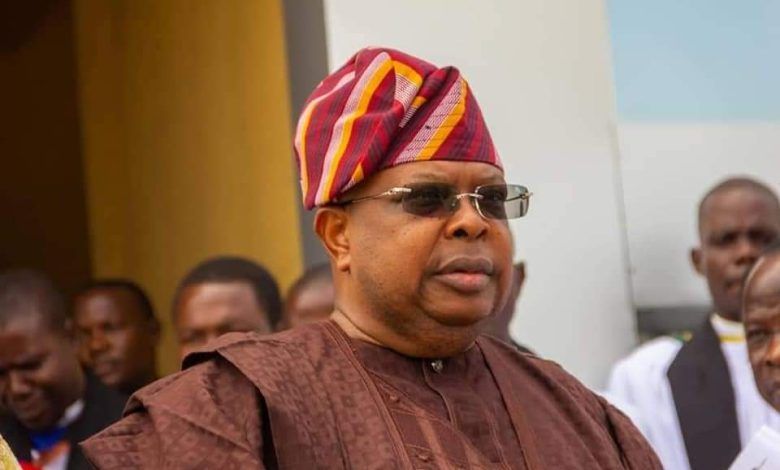
Minister of Power Joseph Tegbe disclosed this on Monday, November 23, 2026, during an interview on ARISE News, saying the government is exploring additional financing mechanisms to complete the settlement next year.
Tegbe said original legacy claims estimated at about ₦6 trillion were negotiated down to ₦3.3 trillion, of which about ₦1.23 trillion has been addressed through bond issuances so far.
“We have paid ₦1.23 trillion, and we are on track to finish paying the rest next year,” the minister said.
He identified royalties, corporate income tax offsets and negotiations with the Nigerian National Petroleum Company Limited (NNPC) over gas costs among the options being considered to settle the outstanding obligations.
The debt settlement is being implemented under the Presidential Power Sector Debt Reduction Programme, which covers verified liabilities accumulated between February 2015 and March 2025.
The programme has raised approximately ₦1.23 trillion across two bond issuances. The first series raised ₦501.021 billion in January 2026, while the second series closed at ₦728.979 billion in September 2026, according to a September 15 report by Nairametrics.
The second series comprised ₦402 billion in cash bonds and ₦326.979 billion in non-cash bonds allocated to participating generation companies.
The first series included ₦300 billion in cash bonds and ₦201.021 billion in non-cash bonds, bringing the combined issuance to approximately ₦1.23 trillion.
Because the instruments include both cash and non-cash components rather than an equivalent sum in immediate direct cash transfers to GenCos, actual liquidity and settlement mechanics remain closely watched. The Nigerian Bulk Electricity Trading Plc (NBET) subsequently announced that settlement under the second series had commenced in October 2026.
However, the government’s ₦3.3 trillion assessment of the legacy debt remains disputed by generation companies, which argue that broader financial obligations across the electricity value chain are substantially higher.
Joy Ogaji, Chief Executive Officer of the Association of Power Generation Companies, said in June 2026 that GenCos had not received payments under the settlement arrangement at the time and rejected the government’s negotiated debt figure.
In a June 8, 2026 report, The PUNCH quoted Ogaji as saying the industry’s debt burden had grown to more than ₦7 trillion, warning that unpaid obligations continued to accumulate.
The dispute centres partly on the verification of historical liabilities and the treatment of debts owed by generation companies to gas suppliers. Power producers argue that trimming their claims without adequately resolving gas payment obligations could leave underlying bottlenecks intact, as gas supply constraints and tight liquidity continue to weigh on plant operations and power output.
Tegbe has also pointed to gas supply constraints and financial pressures on generation companies as major challenges facing the sector.
The government’s 2027 target therefore comes amid ongoing disagreements over the true scale of liabilities across the value chain and efforts to prevent fresh arrears from building up after the settlement.