


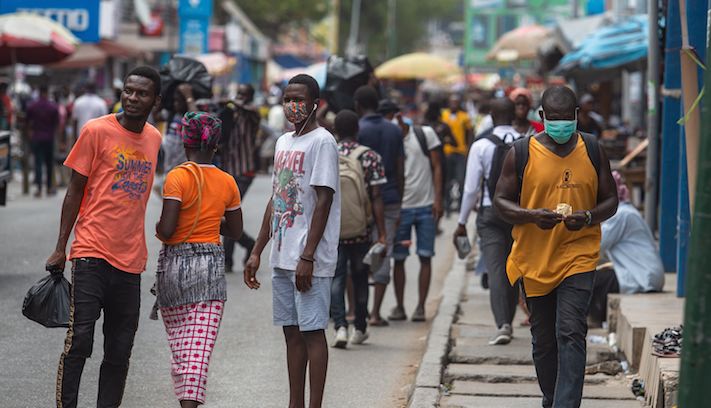

More than 90% of Nigerians remain without health insurance despite national enrolment climbing to roughly 24.1 million people, underscoring the financing hurdles confronting the Federal Government’s push for universal health coverage.
Speaking during an interview on ARISE NEWS on Friday, November 20, 2026, the Director of Health Planning, Research and Statistics at the Federal Ministry of Health and Social Welfare, Dr. John Ovuoraye, noted that while enrolment has risen significantly from about 16 million under the current administration, expanding coverage further requires sustained financial backing.
“Every insurance has a cash backing, which is financing at the back end,” Ovuoraye said.
Data from the Federal Government’s 2026 Joint Annual Review shows national health insurance enrolment reached 24,098,965 by the third quarter of 2026, up from 16,797,451 in the fourth quarter of 2023. Measured against Nigeria’s estimated 2026 population of 242.4 million, according to United Nations population projections, coverage stands at approximately 9.9%, leaving fewer than one in 10 citizens insured.
To bridge the gap, the National Health Insurance Authority (NHIA) has been scaling up federal and state insurance schemes alongside targeted interventions for low-income households. Under the Basic Health Care Provision Fund (BHCPF), 3.18 million vulnerable Nigerians had been enrolled by the third quarter of 2026. Authorities are also pushing to enforce compulsory enrolment among public sector workers and encourage stronger healthcare funding commitments from state governments.
Still, deep-seated health financing gaps continue to limit access. A 2025 Nigeria Health System and Services Profile by the Africa Health Observatory Platform on Health Systems and Policies, updated in October 2026, found that out-of-pocket payments account for more than 75% of Nigeria’s total health expenditure.
While the NHIA Act 2022 provides the legal framework to make health insurance mandatory nationwide, translating legislation into widespread enrolment remains an uphill task, leaving millions of households exposed to direct medical bills whenever illness strikes.