


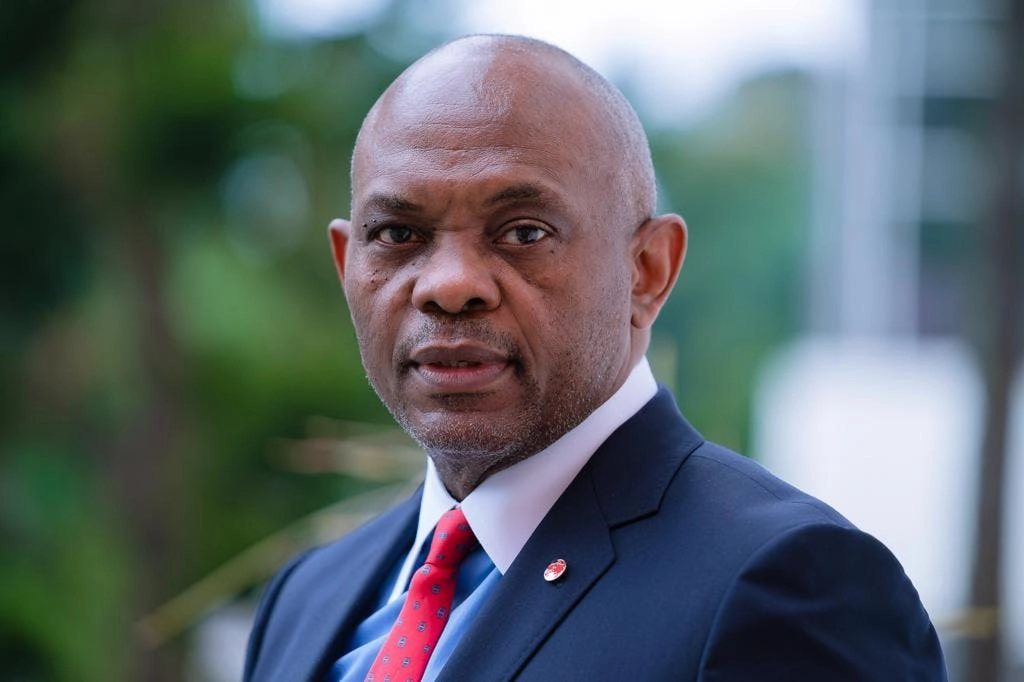

At 34, Tony Elumelu took over a failing Nigerian lender and faced an immediate liquidity crisis that threatened to end the investment before it began. Crystal Bank owed depositors money, public confidence was eroding, and the institution desperately needed a financial turnaround.
Instead of relying solely on fresh capital, Elumelu persuaded some of the bank’s largest creditors to become its owners. Through a debt-for-equity swap, major depositors exchanged their claims on the bank for shares in the business, relieving immediate cash pressure while giving them a direct stake in its recovery. That unconventional move stabilised Crystal Bank, which was soon renamed Standard Trust Bank (STB).
Nearly three decades later, that same instinct for bold financial structuring defines Elumelu’s pivot from banking to energy. On November 16, 2026, Heirs Energies, an energy company he controls, acquired an additional 5.89 million shares in Seplat Energy at £9 each, worth roughly £53 million.
The transaction raised the combined shareholding of Elumelu-controlled entities in one of Nigeria’s leading indigenous oil and gas producers to 22.05%, or 132,288,341 shares, according to regulatory filings published on November 17.
The deal underscores how Elumelu has scaled his career across sectors, using distressed turnarounds, strategic mergers, and long-term equity stakes to build institutional scale.
Elumelu’s 1997 entry into Crystal Bank was the result of a calculated bet. In a February 2015 interview with Vanguard, he recalled that he and his partners had studied Nigeria’s crowded banking landscape, then comprising more than 100 institutions, and anticipated widespread distress. They formed an investment vehicle specifically to acquire and restructure struggling lenders, and Crystal Bank became their proving ground.
Rebranded as Standard Trust Bank, the lender focused on aggressive retail expansion, bringing formal banking services to previously underserved customers. The turnaround was rapid: according to UBA’s historical records, STB became the first Nigerian bank to cross ₦1 billion in annual profit by the end of 1999. It listed on the Nigerian Stock Exchange in 2003 and had risen to become Nigeria’s fifth-largest bank by mid-2004.
Then came a regulatory shake-up that reshaped the industry. In July 2004, the Central Bank of Nigeria (CBN) mandated that banks raise their minimum shareholders’ funds to ₦25 billion by December 31, 2005, triggering a wave of consolidation that reduced Nigeria’s 89 banks to 25 groups.
STB seized the moment to merge with United Bank for Africa (UBA), a legacy institution already among the country’s biggest lenders. Effective August 1, 2005, the merger created a financial powerhouse with over 425 branches, a balance sheet exceeding ₦600 billion, and more than two million customers. With Elumelu as group chief executive, UBA embarked on an aggressive pan-African expansion that eventually extended its footprint across 20 African countries and major global financial centres.
In 2010, Elumelu stepped back from day-to-day banking management to found Heirs Holdings, a proprietary investment firm spanning financial services, power, oil and gas, hospitality, and agribusiness. Guided by his philosophy of Africapitalism, the belief that the African private sector must lead the continent’s economic transformation through long-term investments in critical infrastructure, he increasingly turned his attention to energy.
That focus accelerated sharply in December 2025, when Heirs Holdings and Heirs Energies acquired French oil firm Maurel & Prom’s 20.07% stake in Seplat Energy. Elumelu joined Seplat’s board as a non-executive director on January 22, 2026, and steadily expanded his position, buying six million shares in September 2026 to reach 21.07% before the November 16 purchase pushed his stake to 22.05%.
His influence at Seplat extends beyond equity. On June 9, 2026, Seplat’s board elected Elumelu to succeed Udoma Udo Udoma as chairman effective January 1, 2027, placing him at the helm of a company with major onshore and shallow-water oil and gas production, processing, and export operations. Alongside upstream oil and gas, his group continues to expand in electricity generation and distribution; at the Delta State Economic and Investment Summit in Asaba on August 3, 2026, Elumelu outlined plans to partner with the state government to improve power affordability.
Elumelu’s deepening role in energy coincides with the formal conclusion of his board tenure at UBA. Following a board announcement in July 2026, he retired as UBA Group Chairman on August 21, 2026, upon completing the CBN’s mandatory 12-year tenure limit for non-executive bank directors, handing over to Emmanuel Nnorom.
Even as his operational banking chapter closed, his broader institutional influence continued to grow. Beyond his appointment to the International Monetary Fund’s Advisory Council on Entrepreneurship and Growth in March 2025, his philanthropic vehicle, the Tony Elumelu Foundation, selected 3,200 entrepreneurs from more than 265,000 applicants across Africa in 2026, committing $16 million in funding.
From rescuing Crystal Bank with a creative debt-for-equity swap to orchestrating the UBA merger and taking the reins at Seplat Energy, Elumelu’s playbook has remained consistent: identify under-leveraged or transitional assets, consolidate ownership, and scale them into continental champions.