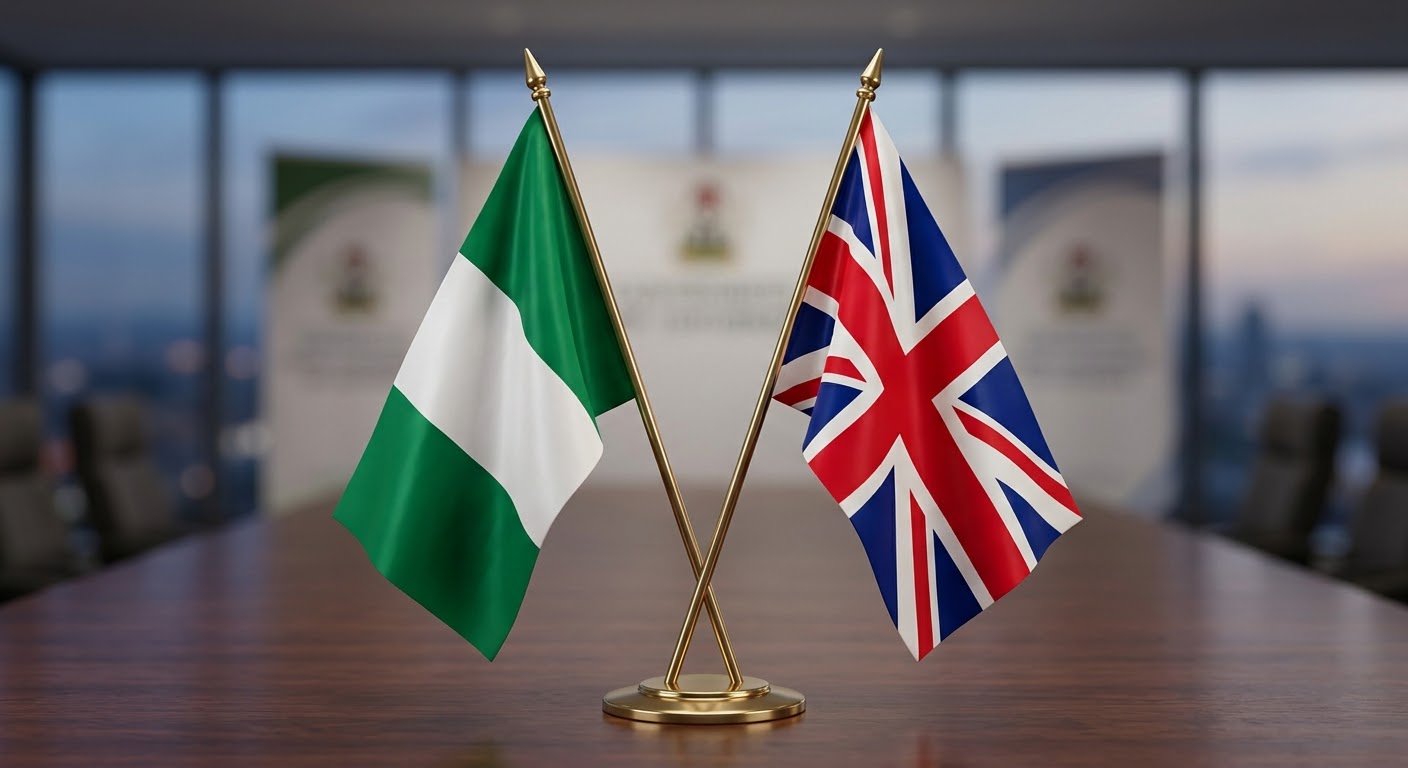

Nigeria has signed a non-binding energy partnership agreement with the United Kingdom at the COP31 climate conference in Antalya, Türkiye, renewing its pledge to end routine gas flaring by 2030 even as domestic flaring volumes continue to rise.
Focused on energy security and transition planning, the Memorandum of Understanding (MoU) aims to strengthen bilateral cooperation on methane reduction while balancing Nigeria’s climate targets with its energy development needs. Minister of State for Foreign Affairs Sola Enikanolaiye signed the agreement on behalf of the Federal Government, acting on behalf of Environment Minister Balarabe Abbas Lawal, who leads Nigeria’s delegation in Antalya.
Speaking at the signing, Enikanolaiye maintained that Nigeria’s energy transition must be just, orderly, and equitable, according to a November 15 report by the Voice of Nigeria. He reaffirmed the country’s commitment to reaching net-zero emissions by 2060, while underscoring that natural gas will remain a vital transition fuel for expanding affordable, reliable power access.
Central to the MoU is a proposed UK-Nigeria Methane Partnership spanning the oil and gas, waste, and agricultural sectors. Under the framework, both nations plan to improve methane measurement, reporting, and verification, tighten leak detection and repair protocols, and curb gas flaring and venting.
Yet the pact runs straight into a persistent domestic reality: Nigeria’s gas flaring has climbed for three consecutive years despite repeated elimination pledges, hampered by weak enforcement of anti-flaring rules and lagging gas-capture infrastructure. Data from the World Bank’s Global Gas Flaring Tracker, highlighted by Premium Times on November 10, shows operators flared an estimated 6.6 billion cubic metres of gas in 2025, up from 6.1 billion cubic metres in 2024 and 5.1 billion cubic metres in 2023.
Beyond its environmental toll, the surge represents a steep economic loss for a country grappling with chronic electricity deficits, burning off gas that could otherwise fuel power plants, domestic industry, and household consumption. As scrutiny on the sector intensifies, state-owned NNPC Limited and Oando have signed onto the Oil and Gas Decarbonisation Charter, which released its 2026 status report during COP31.
Nigeria is also tapping into multilateral technical support to close its emissions gap. The country is among 14 developing nations enrolled in the Super Pollutant Country Action Accelerator, an initiative backing methane and short-lived climate pollutant reductions. Having been among the initial seven countries selected at COP30, Nigeria stands to benefit from an additional $25 million announced at COP31 by UK Climate Minister Katie White to expand the programme and help participants structure bankable emissions-reduction projects, Premium Times reported on November 13.
Abuja has also used the summit’s sidelines to advance broader bilateral economic ties, agreeing with host nation Türkiye to convene a Joint Economic Commission in the first quarter of 2027 to deepen cooperation in energy, infrastructure, trade, and investment. That timeline builds on the Joint Economic and Trade Commission (JETCO) declaration signed during President Bola Tinubu’s January 27, 2026 visit to Ankara, according to the Turkish Directorate of Communications.
Still, because the UK-Nigeria MoU is non-binding and carries no disclosed financial commitments, its practical impact remains uncertain. For Nigeria, the decisive test will not be signed in Antalya, but measured at home, in whether international frameworks translate into stricter regulatory enforcement, expanded gas-utilisation infrastructure, and a sustained reversal in flaring volumes.