
Lagos State is seeking increased private-sector investment in electricity generation, distribution and off-grid power projects to address an estimated electricity demand of 12,000 megawatts (MW), against supply of less than 1,000MW from the national grid.
The development leaves the state with a potential supply shortfall exceeding 11,000MW, highlighting the scale of investment required to provide reliable electricity for households, businesses and industries.
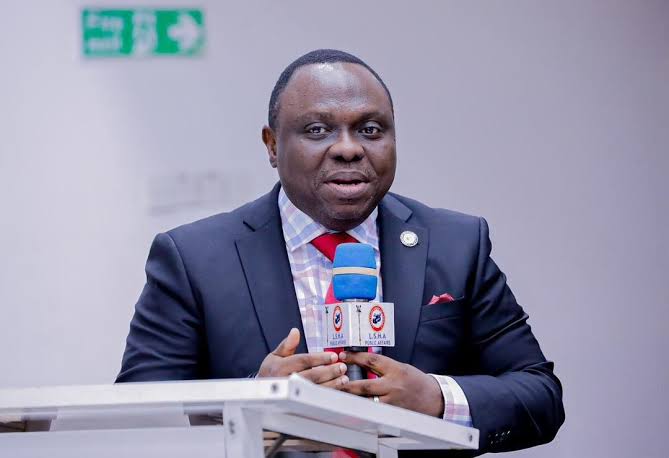
The Commissioner for Energy and Mineral Resources, Biodun Ogunleye, disclosed the demand estimate at the Lagos Energy Summit 2026, held on November 10 and 11 at Landmark Centre, Victoria Island, Lagos.
In a report published on November 11, 2026, Nairametrics said Ogunleye called for private investment in embedded generation, off-grid electricity and distribution infrastructure to improve power supply across the state.
According to the commissioner, Lagos is pursuing a Seven-Point Energy Agenda covering cooperation between federal and state regulators, electricity market sustainability, power generation, electricity distribution, metering, off-grid solutions and technology deployment.
The government is positioning its electricity market as an investment opportunity following the implementation of the Lagos State Electricity Law 2024, which established the Lagos State Electricity Regulatory Commission (LASERC) to regulate electricity activities within the state.
The regulatory framework is expected to encourage private participation in generation, distribution and other areas of the electricity value chain.
In April 2026, the Lagos State Government signed Power Purchase Agreements (PPAs) with three independent power operators: Mainland Power Limited, Fenchurch Nigeria Limited and Viathan Engineering Limited.
According to the Lagos State Office of Public-Private Partnerships, which announced the agreements on April 27, the arrangements are designed to strengthen decentralised electricity supply and support critical public infrastructure.
The agreements cover the rehabilitation of the 26MW Akute Independent Power Plant by Fenchurch Power, the renewal of Mainland Power’s supply arrangement in Ikeja and the continued operation of Viathan’s Island and Peninsula power projects.
Mainland Power has an installed capacity of 8.8MW and a contracted capacity of 5.8MW, while Viathan’s Island and Peninsula projects have a combined installed capacity of 21MW.
The state said the three operators were expected to expand their combined generation capacity from below 60MW to between 200MW and 400MW over the next two to three years through additional market-driven investments.
Private companies are also developing new projects outside the PPA arrangements.
On April 16, 2026, Odu’a Investment Company announced a partnership with Elektron Energy Development Strategies Limited to develop a 50MW gas-fired independent power plant at the former Cocoa Industries Limited complex in Ogba Industrial Estate, Ikeja.
The project is expected to provide dedicated electricity to industrial and commercial customers within the Ogba business cluster.
Other developments include Elektron Energy’s proposed 40MW Victoria Island Power project and Sahara Power’s 12MW independent power project in Ogba, according to Nairametrics’ October 8 report on developments in Lagos’ electricity market.
Regulatory approvals are also expanding opportunities for new operators. On May 9, 2026, Channels Television reported that LASERC had approved 14 electricity licences and permits covering off-grid generation, embedded generation, independent distribution, metering services and interconnected mini-grid operations.
The approvals included a 5.8MW off-grid generation project by Axxela Limited at Cadbury Nigeria in Agidingbi, a 9MW embedded generation project by Isolo Power Gen Limited and several other electricity infrastructure and service projects.
Lagos is also pursuing improvements in gas supply to support private power generation.
On June 24, 2026, The Independent reported that Governor Babajide Sanwo-Olu had announced the signing of a gas commercialisation framework between the Lagos State Government and the Gas Aggregator Company Nigeria Limited.
The framework is designed to secure gas at less than half of prevailing gas-to-power prices, potentially reducing one of the major operating costs facing independent power producers.
Beyond attracting private investors, the state has set a target of increasing electricity supply to more than 3,000MW by March 2027, from below 1,000MW.
Governor Sanwo-Olu announced the target at the fourth Lagos Business School Africa Energy Conference on October 11, 2026, according to Premium Times.
The governor said the state planned to mobilise approximately 2,000MW of additional electricity through national grid supply, independent power projects, energy hubs, power barges, energy traders and embedded generation.
He also identified improvements in transmission, distribution, gas supply, substations and metering as necessary to achieve the target.
For investors, Lagos’ electricity market offers opportunities across power generation, gas infrastructure, renewable energy, mini-grids, electricity distribution and metering.
The government is betting that increased private investment and improved electricity infrastructure will reduce dependence on self-generation, lower operating costs for businesses and strengthen the state’s position as Nigeria’s commercial and industrial centre.