The Federal Government has suspended the newly introduced Free on Board (FOB) levy on imported goods, directing the Nigeria Customs Service (NCS) to halt its collection with immediate effect.
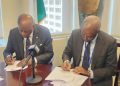
In a memo issued by R. O. Omachi, Permanent Secretary for Special Duties in the Office of the Minister of Finance and Coordinating Minister of the Economy, the government said the decision followed “extensive consultations with industry stakeholders, trade experts, and relevant government officials.”
Introduced as a 4% charge on the FOB value of imports, the levy was designed to boost non-oil revenues and strengthen fiscal buffers. However, its rollout drew swift criticism from businesses, freight forwarders and manufacturers, who warned that it would increase the cost of imports, worsen inflationary pressures, and erode Nigeria’s already fragile trade competitiveness.
Omachi acknowledged these concerns, noting that the charge posed “significant challenges to trade facilitation, the economic environment, and overall stability.” He added that the suspension would create room for “comprehensive stakeholder engagement” to review the policy and assess alternatives.
Economic backdrop
The suspension comes at a time when the government is grappling with persistent inflation, foreign exchange volatility, and sluggish industrial output. Import-dependent sectors, from manufacturing to retail, have been particularly squeezed by high logistics costs and currency depreciation. Adding a further 4% levy on imports could ripple through supply chains, raising the cost of raw materials and consumer goods alike.
Nigeria’s revenue needs remain pressing, with oil receipts under pressure from production shortfalls and global price uncertainty. Customs duties, levies and taxes on imports are a critical source of non-oil income, but frequent policy shifts have often unsettled the trading environment. Industry groups argue that stability and predictability are more important than short-term revenue gains, especially as Nigeria seeks to attract investment under the African Continental Free Trade Area (AfCFTA).
Next steps
The government has not indicated whether the levy is permanently scrapped or only temporarily shelved, leaving open the possibility of a revised measure after consultations. Trade associations are expected to push for policies that balance fiscal needs with competitiveness, while businesses continue to call for a broader review of Nigeria’s import regime, including port efficiency, tariffs and clearance procedures.
For now, the suspension eases immediate pressure on importers, but it also highlights the broader dilemma facing policymakers: how to raise revenues without choking economic activity or undermining the government’s commitment to improving the business climate.