


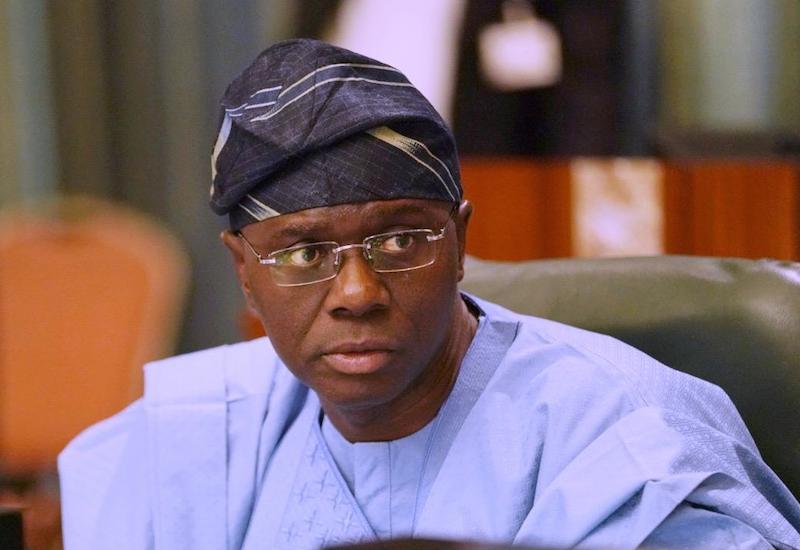

Lagos State Governor Babajide Sanwo-Olu has urged Chinese investors to establish manufacturing and assembly plants in Nigeria rather than concentrate on exporting finished products, as the state seeks to attract foreign investment, create jobs and strengthen local production.
Sanwo-Olu made the call on Tuesday, November 3, 2026, at the opening ceremony of the 19th China Commodities Expo-Nigeria 2026, held at the Landmark Event Centre, Victoria Island, Lagos.
Represented by the Commissioner for Commerce, Cooperatives, Trade and Investment, Folashade Bada Ambrose-Medebem, the governor said the next phase of Nigeria-China commercial relations should focus on building industries through partnerships between Nigerian businesses and Chinese enterprises.
He urged Nigerian entrepreneurs to move beyond importing finished products and explore opportunities to assemble, manufacture and eventually export goods produced through partnerships with Chinese companies.
According to the governor, Lagos offers significant opportunities for Chinese manufacturers seeking to establish production facilities, supported by its large consumer market, commercial activities and growing infrastructure.
Sanwo-Olu identified electronics, electrical equipment, machinery, automotive components, agro-processing, textiles and renewable energy as sectors with investment opportunities.
He also highlighted the Lekki Deep Sea Port, ongoing road infrastructure projects and the Lagos State Electricity Law of 2024 as important factors in the state’s efforts to attract industrial investment.
The governor said the electricity law, which established the Lagos State Electricity Regulatory Commission, was part of efforts to encourage investment in power infrastructure and improve electricity supply to businesses and households.
He further cited Lagos’ first-place position in the 2025 Presidential Enabling Business Environment Council’s Subnational Ease of Doing Business assessment, where the state scored 85.6 per cent.
However, he acknowledged that more work remained to address practical challenges facing investors and entrepreneurs.
The governor also emphasised the importance of ensuring that foreign investment benefits local businesses, particularly micro, small and medium-sized enterprises (MSMEs).
Addressing concerns raised by traders at the ASPAMDA section of the Lagos International Trade Fair Complex over the activities of some Chinese businesses, Sanwo-Olu called for dialogue, fair competition and compliance with applicable laws.
He urged Chinese enterprises to engage with local business associations and explore partnerships that would strengthen Nigerian businesses rather than create unnecessary commercial tensions.
Speaking at the event, the National President of the Association of Small Business Owners of Nigeria, Femi Egbesola, encouraged Nigerian entrepreneurs to look beyond finished products and explore opportunities in machinery, production processes and technology transfer.
He said Nigerian distributors, business owners and entrepreneurs could become strategic partners for Chinese companies seeking to expand their operations.
Also speaking, the Director of the Industrial Inspectorate Department at the Federal Ministry of Industry, Trade and Investment, Eyitope Aina Osinowo, stressed the importance of regulatory compliance, product quality, operational efficiency and environmental sustainability in industrial investment.
He said the success of foreign investment should be measured not only by the amount of capital committed or the number of factories established but also by the jobs created, skills developed and lasting economic value generated.
The push for Chinese manufacturing investment comes as Nigeria seeks to strengthen domestic production, expand industrial capacity and reduce dependence on imported finished goods.
For Nigeria, attracting manufacturers will require more than investment announcements. Reliable electricity, infrastructure, access to finance, regulatory certainty and stronger local supply chains will remain important to determining whether foreign partnerships translate into sustainable industrial growth.


