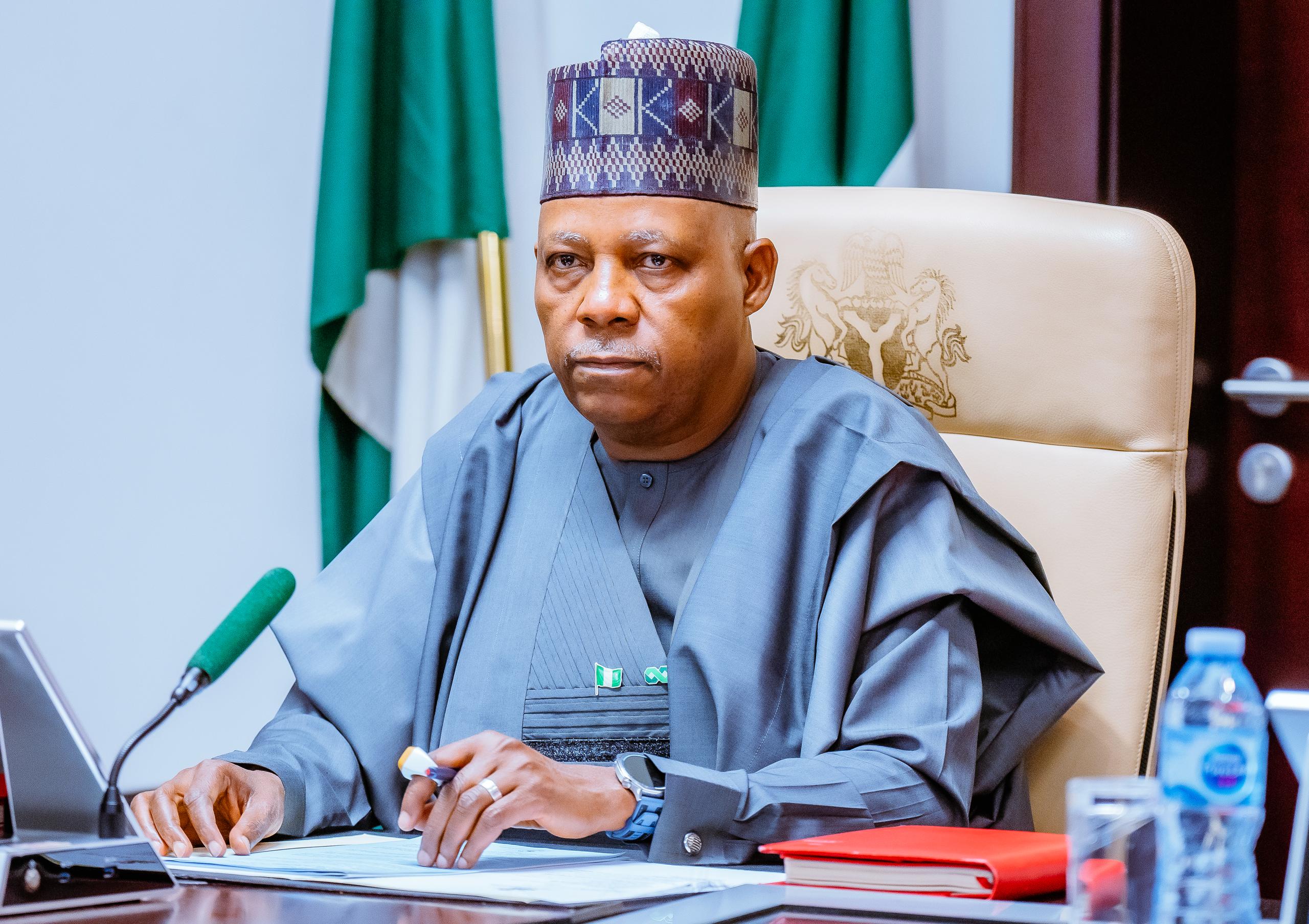

Vice-President Kashim Shettima has urged the Federal Government to pay closer attention to Nigerians’ concerns about ongoing economic reforms, stressing that public confidence depends on transparent communication, credible evidence of progress and responsiveness to citizens’ experiences.
Shettima made the call through his Special Adviser on Economic Affairs, Dr Tope Fasua, at The Duke’s Masterclass 2026 in Abuja on Thursday, according to a report published by The PUNCH on October 29, 2026.
The Vice-President said the success of government policies should not be measured solely by their implementation but also by the extent to which Nigerians understand their objectives and experience tangible improvements in their lives.
His remarks come amid continuing public concerns over the effects of major economic changes introduced by President Bola Tinubu’s administration, including petrol subsidy removal and foreign exchange liberalisation.
While the government has defended the reforms as necessary to correct economic distortions, strengthen public finances and attract investment, Shettima stressed that announcing policy decisions without explaining their implications and demonstrating results could undermine public confidence.
He urged the government to communicate more effectively with citizens and ensure that public concerns inform policy decisions.
The Vice-President also challenged Nigeria’s elite, professionals and middle class to acknowledge the difficulties facing ordinary Nigerians while contributing to informed discussions about the country’s economic direction.
He maintained that their responsibility was neither to defend every government action uncritically nor to dismiss citizens’ concerns, but to encourage constructive engagement and promote a better understanding of the reforms.
Shettima further warned that artificial intelligence and social media were making misinformation more sophisticated, creating additional challenges for institutions seeking to maintain public trust.
He called for greater emphasis on accuracy in public communication and improved digital literacy to help Nigerians distinguish credible information from misleading claims.
On investment opportunities, he identified banking, technology, agriculture and the creative industry as sectors capable of supporting economic growth. However, he acknowledged that unreliable electricity, insecurity and limited access to finance remained significant obstacles to business expansion and investment.
Other speakers at the event also highlighted the importance of leadership, institutional credibility and responsible communication.
Bimbo Ashiru of Odu’a Investment Company warned that poor leadership and inadequate preparation for crises could damage institutional credibility, while former Commonwealth Secretary-General Emeka Anyaoku cautioned that premature communication could undermine sensitive processes.
Kola Adesina of Sahara Power Group criticised Nigeria’s electricity supply challenges, arguing that the country needed practical solutions rather than repeated explanations for persistent power shortages. He also raised concerns about corruption in public contracts.
The discussions underscored the importance of accountability and public engagement in governance, particularly as policymakers seek to implement reforms with far-reaching consequences for households and businesses.
For the Federal Government, the challenge remains to sustain its economic policy objectives while demonstrating measurable progress, addressing legitimate public concerns and ensuring that improvements in economic indicators translate into better living conditions for Nigerians.