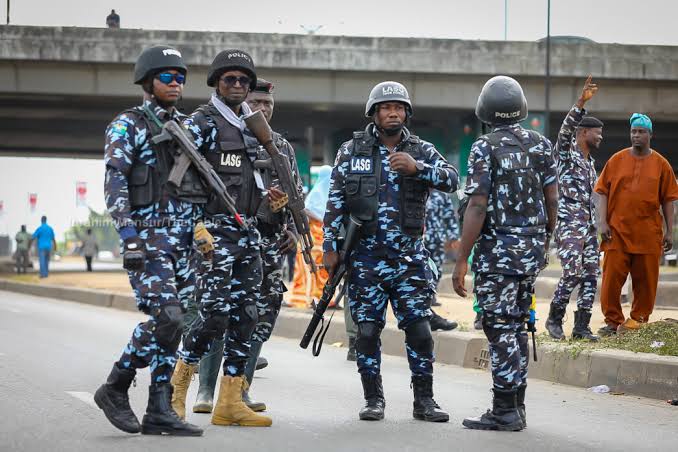

At least 30 state assemblies have endorsed the proposed constitutional amendment to establish state police in Nigeria, bringing the country closer to adopting a decentralised policing system to tackle insecurity.
The development was reported by The Guardian on October 28, 2026, while Daily Post reported on October 29 that the number had risen to 32 states, with four states still awaiting approval.
The endorsements have surpassed the constitutional requirement of 24 states, representing two-thirds of Nigeria’s 36 state assemblies, allowing the amendment to advance towards the next stage of the constitutional review process.
In a statement issued on October 23, the Presidential Working Group on the National Policing Bill confirmed that the proposed amendment had secured the required two-thirds support from the state legislatures.
The proposal, contained in the Constitution (Sixth Alteration) Bill, 2026, seeks to establish state police services alongside the existing federal police structure.
Under Section 9(2) of the 1999 Constitution, an amendment requires approval through resolutions of at least two-thirds of the state Houses of Assembly after passage by the National Assembly.
The state endorsements represent a major step towards changing Nigeria’s centralised policing structure, which has faced growing calls for reform amid persistent security challenges across the country.
Daily Post’s October 29 report listed Abia, Adamawa, Akwa Ibom, Anambra, Bayelsa, Benue, Cross River, Delta, Ebonyi, Edo, Ekiti, Enugu, Gombe, Imo, Jigawa, Kaduna, Kano, Kebbi, Kogi, Kwara, Lagos, Nasarawa, Ogun, Ondo, Osun, Oyo, Plateau, Rivers, Sokoto, Taraba, Yobe and Zamfara among the states that had approved the proposal.
Supporters of state policing argue that allowing state governments to establish their own police services could improve intelligence gathering, strengthen community policing and enable faster responses to banditry, kidnapping and other security threats.
They also argue that local authorities would be better positioned to understand the security needs of their communities and deploy personnel accordingly.
However, the proposal has raised concerns about possible political interference, particularly the risk of governors using state police to target opponents or suppress dissent.
Funding, recruitment, training and effective oversight are also expected to be important considerations in establishing and managing the proposed police services.
The constitutional amendment will not automatically bring state police into operation. The remaining constitutional procedures must be completed, including transmission of the altered Constitution to President Bola Tinubu for assent.
In addition, an effective implementation framework will be required to define the responsibilities of federal and state police, establish accountability mechanisms and provide adequate funding for the new structure.
The Presidency said on October 23 that the amendment had crossed the required state approval threshold, while further legislative work on the National Policing Bill, 2026, was also under way.
The reform’s implementation will therefore depend on the completion of the constitutional process and the legal and administrative arrangements needed to make state policing operational.