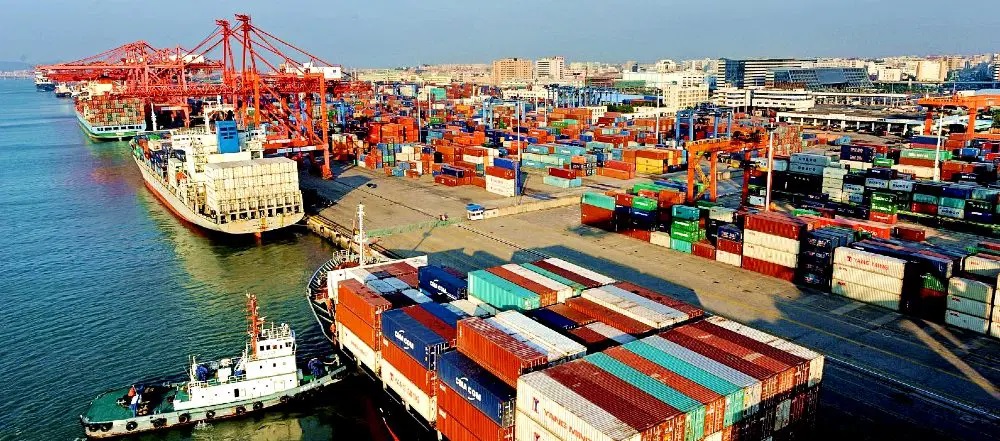

Nigeria’s ports are facing a cargo evacuation challenge that extends beyond the capacity of terminals to handle ships and containers. With trucks carrying the overwhelming majority of cargo to and from seaports, weak rail connections, limited waterways infrastructure and persistent road congestion continue to put pressure on Nigeria’s logistics system and the cost of doing business.
A report by The Guardian published on March 25, 2026, said more than 90% of cargo freight was transported by road, with industry figures putting the share of cargo evacuated by trucks at between 90% and 95%. Inland waterways accounted for about 7%, while rail handled a much smaller share.
The report, which examined Nigeria’s weak intermodal transport system, linked the imbalance to port congestion, high logistics costs, road infrastructure damage and declining trade competitiveness.
The problem is particularly visible around the Apapa and Tin Can Island ports in Lagos, where trucks compete for limited road space while importers and exporters depend on the movement of containers to warehouses, factories and distribution centres.
According to The Punch on July 2, 2026, the Nigerian Ports Authority established a multi-agency task force to address recurring congestion on Lagos port access roads. The intervention followed complaints about illegal extortion checkpoints, overlapping responsibilities among security agencies and other operational inefficiencies affecting cargo movement.
However, road traffic management alone cannot resolve the underlying imbalance if most cargo continues to depend on trucks.
Rail freight offers an alternative for moving large volumes of containers over longer distances, particularly to inland dry ports and industrial centres. But its effectiveness depends on direct terminal connections, adequate rolling stock, reliable schedules and efficient transfer arrangements.
Without these links, cargo owners may continue to choose trucks even when rail transport could offer lower costs over longer distances.
Barges also provide an opportunity to move containers along inland waterways, reducing the number of heavy vehicles using port access roads. However, wider adoption requires dependable waterways, suitable jetties, cargo-handling facilities, security and predictable service charges.
The Nigerian Ports Authority has taken steps to expand alternatives. The Guardian reported on August 6, 2026, that the authority had expanded barge operations to move more than 30% of containerised cargo through inland waterways. The report also said the NPA had removed more than 1,500 illegally parked trucks and unauthorised checkpoints from Apapa port corridors.
Separately, The Punch reported on September 17, 2026, that APM Terminals Apapa planned to increase rail cargo evacuation and introduce round-the-clock barge operations in the fourth quarter of 2026. The terminal operator said the initiatives were aimed at easing bottlenecks in the export logistics chain.
These developments suggest that alternatives to road transport are available, but sustaining the shift will require coordination among the NPA, Nigerian Railway Corporation, Nigeria Customs Service, terminal operators, waterways authorities, truck operators and state governments.
Authorities also need to strengthen truck appointment systems, maintain access roads, enforce axle-load limits and provide designated truck parks. Digital cargo tracking and coordinated documentation could further reduce delays at terminals and checkpoints.
For businesses, the objective is not simply to move cargo off the roads but to make alternative transport dependable and commercially attractive. Importers and exporters need predictable delivery times, competitive charges and clear responsibility for cargo handling.
The economic consequences extend beyond shipping companies and freight forwarders. Higher transport costs can increase the expenses of manufacturers, wholesalers and retailers, putting additional pressure on the prices consumers pay for imported goods, raw materials and locally produced items.
Nigeria’s port efficiency therefore depends on more than expanding terminal capacity. A functioning multimodal system that integrates road, rail and waterways would give cargo owners more options, reduce pressure on access roads and improve the movement of goods from ports to markets.
The immediate priority is to improve truck management and existing barge operations while repairing critical access roads. Over the medium term, stronger rail freight connections and inland dry-port links will be essential.
Ultimately, the success of port reforms will depend on whether cargo can leave terminals quickly, reliably and at a competitive cost, not merely on how efficiently ships are unloaded.