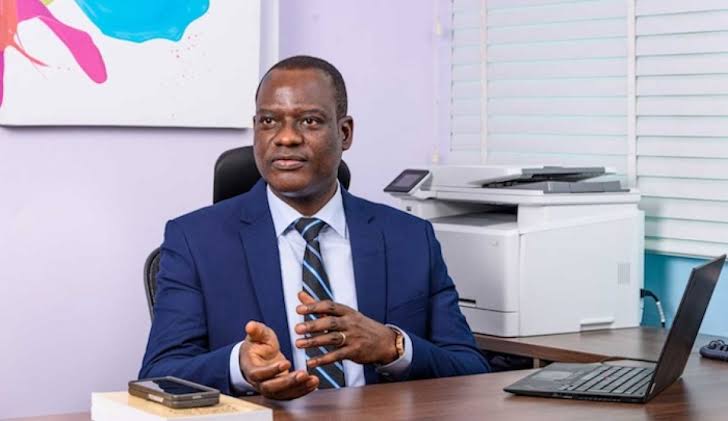

Nigeria’s Minister of Finance and Coordinating Minister of the Economy, Taiwo Oyedele, has denied that the Federal Government is planning to introduce a fuel tax when the economy stabilises, describing reports suggesting such a plan as fake news.
In a post on his official X account on Tuesday, October 20, 2026, Oyedele said his remarks during an interview with ARISE News had been misrepresented, insisting that a fuel tax was not under consideration by the government.
“Having removed the fuel subsidy, it would be insensitive for government to impose a fuel tax at this time,” the minister said, urging Nigerians to disregard misleading headlines and watch the full interview for context.
However, the clarification followed reports published on Monday, October 19, 2026, by The PUNCH and TheCable, which quoted Oyedele as saying fuel taxes could be introduced when the economy stabilises and Nigerians’ income levels improve enough to accommodate the additional cost.
According to TheCable’s report of October 19, Oyedele made the remarks during an interview with ARISE News business correspondent Rotus Odiri on the sidelines of the 2026 International Monetary Fund and World Bank annual meetings in Bangkok, Thailand.
During the interview, the minister discussed fuel taxation in other countries, noting that taxes account for between 20% and 80% of pump prices in some countries, while several African countries impose multiple taxes on fuel products.
The reports triggered concerns about the possibility of additional charges on petrol at a time Nigerians are grappling with high fuel prices and rising transportation and living costs.
Oyedele’s October 20 clarification maintained that the government was not considering a fuel tax at this time. The Federal Ministry of Finance also urged the public to rely on the minister’s full remarks rather than headlines it described as misleading.
The controversy comes amid government efforts to cushion the impact of rising petrol prices following the removal of the fuel subsidy in May 2023.
One of the recent measures is a temporary petrol retail margin discount involving the Nigerian National Petroleum Company Limited (NNPCL), under which NNPCL Retail was expected to forgo its retail margin for 30 days to provide relief, particularly to public transport operators.
The government has presented the measure as a temporary commercial intervention rather than a return to the former petrol subsidy regime.
Oyedele urged Nigerians to distinguish between the temporary relief measures and the introduction of a new tax, reiterating that a fuel tax was not currently on the government’s agenda.