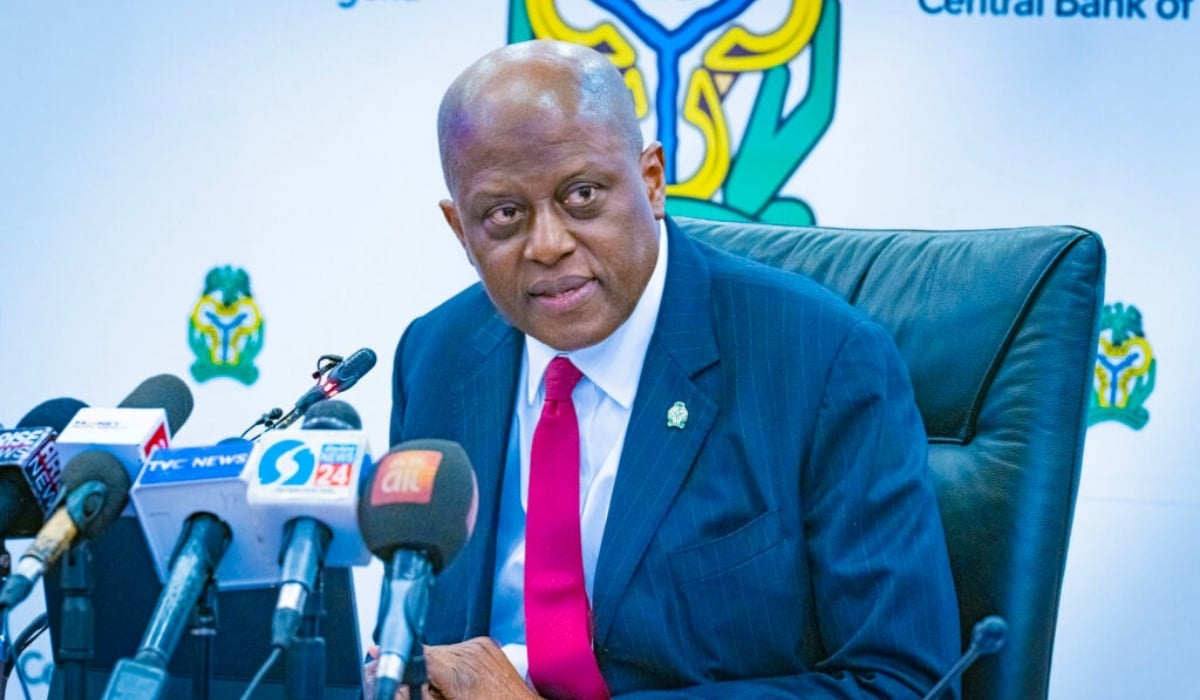

Nigeria’s foreign exchange reserves have risen to $55.1 billion, their highest level in 18 years, with Central Bank of Nigeria (CBN) Governor Olayemi Cardoso saying the growing buffer is helping protect households and businesses from global economic shocks.
Cardoso made the remarks during the IMF–World Bank Annual Meetings in Bangkok, Thailand, where he linked the country’s stronger external position to relative naira stability and efforts to reduce inflation.
In a report published on Thursday, October 15, 2026, Nairametrics said Nigeria’s gross external reserves stood at $55.1 billion as of October 13, while Cardoso described the improvement as an important safeguard against international economic pressures.
“What we’ve been able to accomplish in terms of having very robust external reserves, highest in 18 years, is also something that affects the ordinary person,” Cardoso said.
He argued that Nigeria would have been more exposed to external pressures without the stronger reserve position, particularly amid geopolitical conflicts and international trade tensions.
“Without that, a lot of the headwinds that other countries face, we would be facing them, in fact, in a perhaps worse way than they are facing,” he said.
The governor’s remarks come as policymakers face pressure to translate improvements in foreign exchange market conditions into tangible benefits for Nigerians dealing with high living costs.
Cardoso said the naira’s relative stability and appreciation had implications across the economy, including for businesses that depend on imported goods, raw materials and production inputs.
A more stable exchange rate can reduce the cost of imports and ease pressure on businesses, although the extent to which such gains reach consumers depends on other costs and market conditions.
The improvement extends beyond gross reserves. Nigeria’s net foreign exchange reserves have also climbed to a record $46 billion, according to Cardoso’s earlier disclosure at the Nigeria-Asia Connectivity Dialogue.
Nairametrics reported on October 9, 2026, that the net figure had increased by about $11 billion from the $34.80 billion recorded at the end of December 2025.
Net reserves account for certain near-term foreign exchange liabilities, including obligations arising from swaps and forward contracts. The measure therefore provides a different picture of the foreign currency buffer available after such liabilities are considered.
The latest figures represent a substantial improvement from the foreign exchange crisis that confronted the country when Cardoso took office. According to his earlier account, Nigeria had about $3 billion in net reserves in 2023, with the position falling below $1 billion at the height of the crisis.
The CBN subsequently pursued monetary tightening, foreign exchange market reforms and measures intended to improve dollar liquidity and restore investor confidence.
Stronger reserves can help the central bank meet external obligations, manage periods of foreign exchange pressure and reassure investors about the country’s ability to access foreign currency.
Cardoso also identified falling inflation as an important channel through which economic improvements could benefit ordinary Nigerians, particularly low-income households whose purchasing power is weakened by rising prices.
“Arguably the most vicious tax you have on the poor is inflation. And being able to bring down inflation obviously affects the ordinary person. It affects everybody,” he said.
However, rising reserves do not automatically translate into cheaper food, transport, rent or other household expenses. The effect on living standards also depends on the pace of inflation, exchange rate movements, domestic production costs and how businesses pass on savings to consumers.
For manufacturers and import-dependent businesses, improved access to foreign exchange and greater exchange rate predictability could support planning and investment. For households, sustained price moderation would be essential for the benefits to become more visible in everyday spending.
Nigeria’s reserve position is therefore an important indicator of its capacity to withstand external shocks, but the broader test will be whether currency stability and lower inflation can be sustained and translate into stronger purchasing power, business activity and economic confidence.